Muscle & Classics
Declasse Sabre Turbo
Declasse · Muscle
- Seats
- 2
- Drivetrain
- RWD
- Top speed
- ~115 mph / 185 km/h
- Price
- ~$28,000
- Mass
- 1,900 kg
- Real-world inspiration
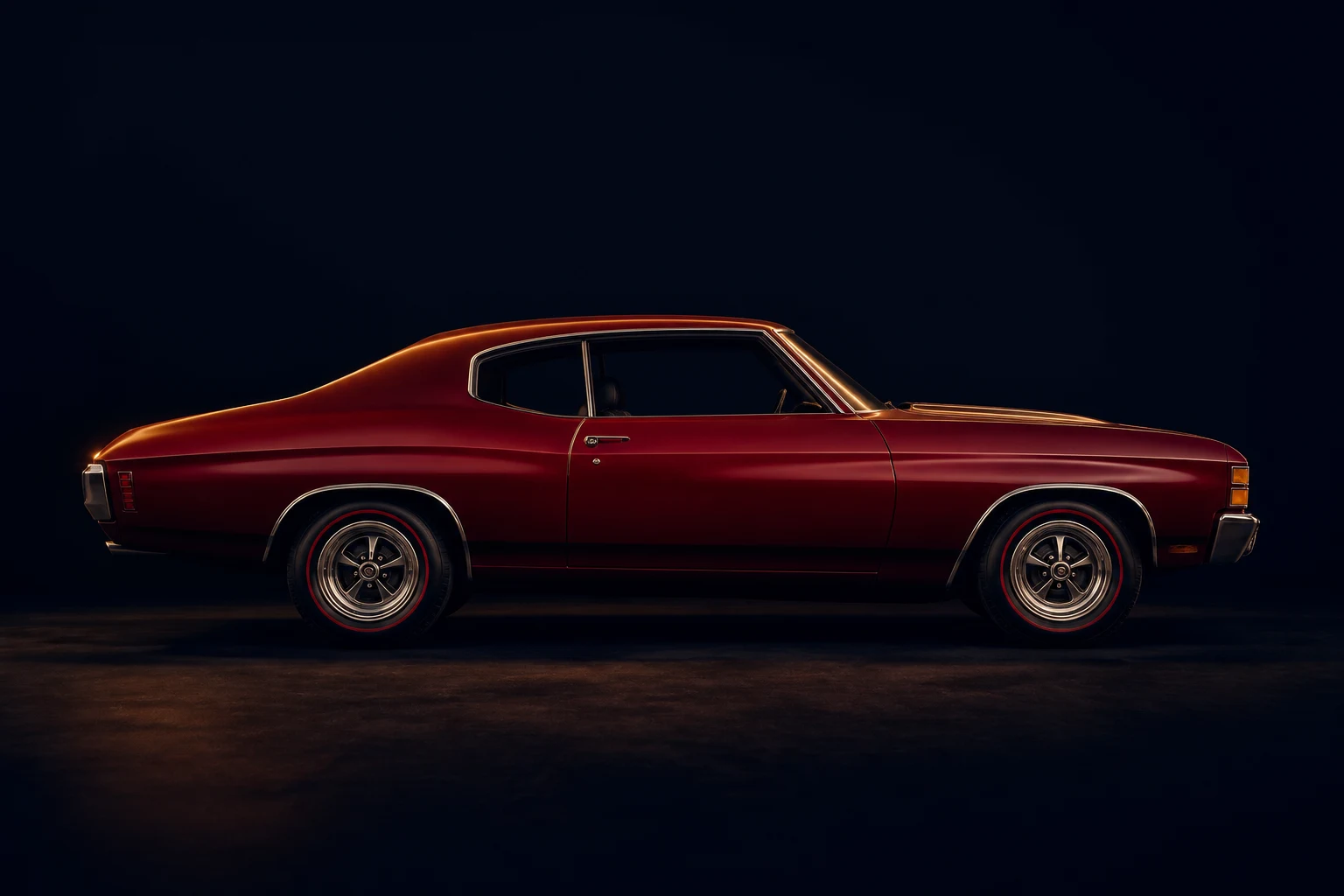
- Chevrolet Chevelle SS
- Availability
- Private sale within the enthusiast scene, the north marina classic dealer, Port Gellhorn used lots and coastal auctions; regular street spawns in Hamlet, Grassrivers and Kelly County.
- Overview
- The definitive American street machine - a squared-off Declasse coupe with a hood scoop, a stripe down the middle and more power than the chassis was ever designed to handle.
Description
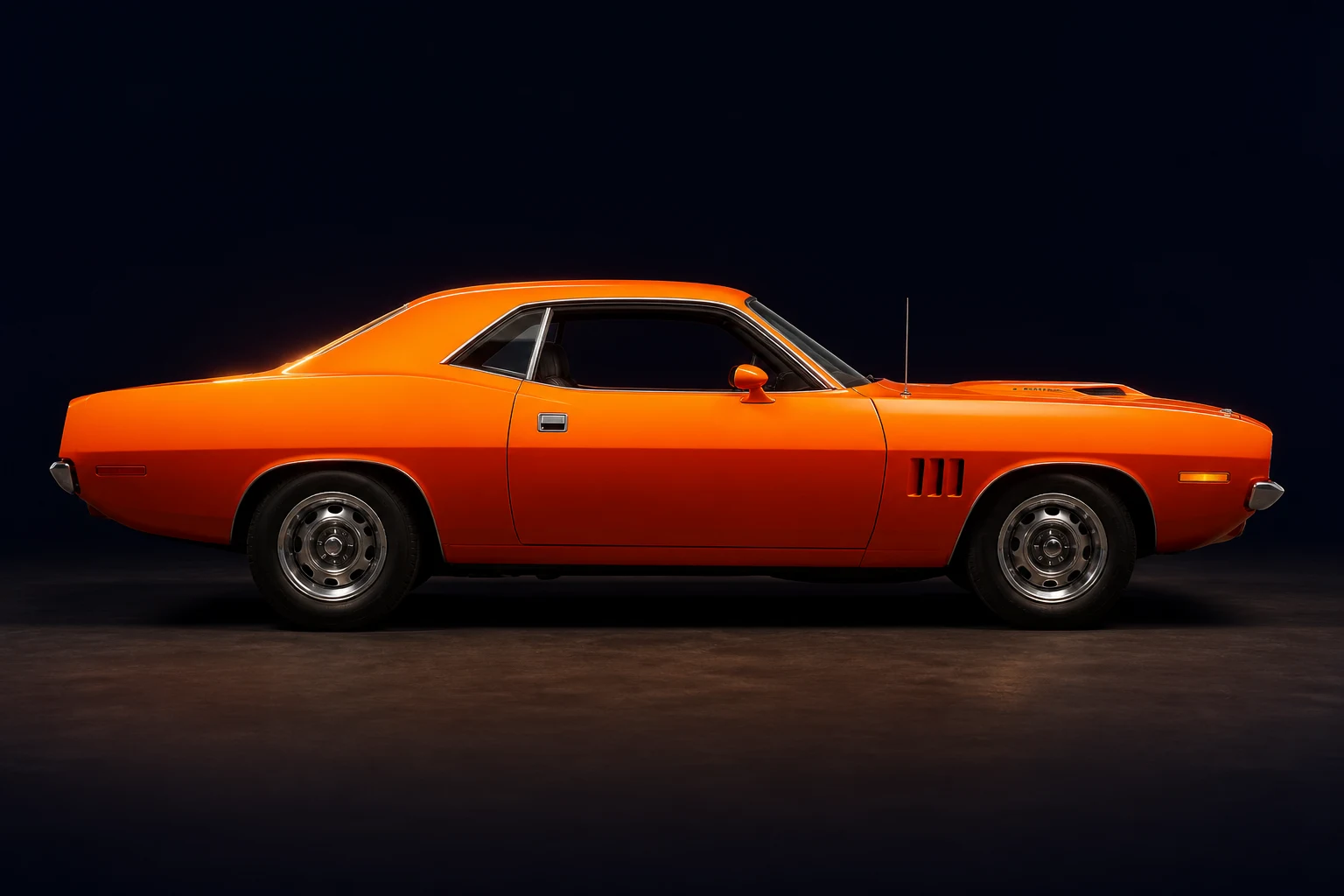
If you asked somebody in Leonida to draw a muscle car without thinking about it, they would draw the Declasse Sabre Turbo. It is the archetype: a big squared-off two-door with a blunt nose, a flat hood carrying a scoop, twin stripes running front to back, and a stance that suggests the rear tires are permanently on the verge of losing the argument. Every visual cliché of the genre is present, and most of them originated here.
The Turbo designation is a little misleading - it refers to a Declasse trim package rather than to forced induction on the original cars - but the reputation is earned regardless. This was the model that Declasse built when the internal rules about engine displacement in mid-size cars stopped being enforced, and the result was a machine with a power-to-grip ratio that borders on comedic. A Sabre Turbo will break traction changing from second to third on a dry road at speed.
In Leonida it has a particular resonance because so many survived. The state's climate is kind to bodywork in a way that northern winters are not, and while a lot of Sabres were driven into the ground, a lot more sat in carports in Grassrivers and Hamlet for thirty years waiting for somebody to notice them. The result is a healthy population of usable cars and a restoration scene with genuine depth.
It has become the default project car for the state's street scene. Where a Dominator is what you drive, a Sabre Turbo is what you build - a car that people put years into, that carries a name and a reputation at the east-side meets, that gets rebuilt after it gets wrecked rather than replaced. There are Sabres in Leonida on their fourth engine and second chassis that are still, to their owners, the same car.
Design
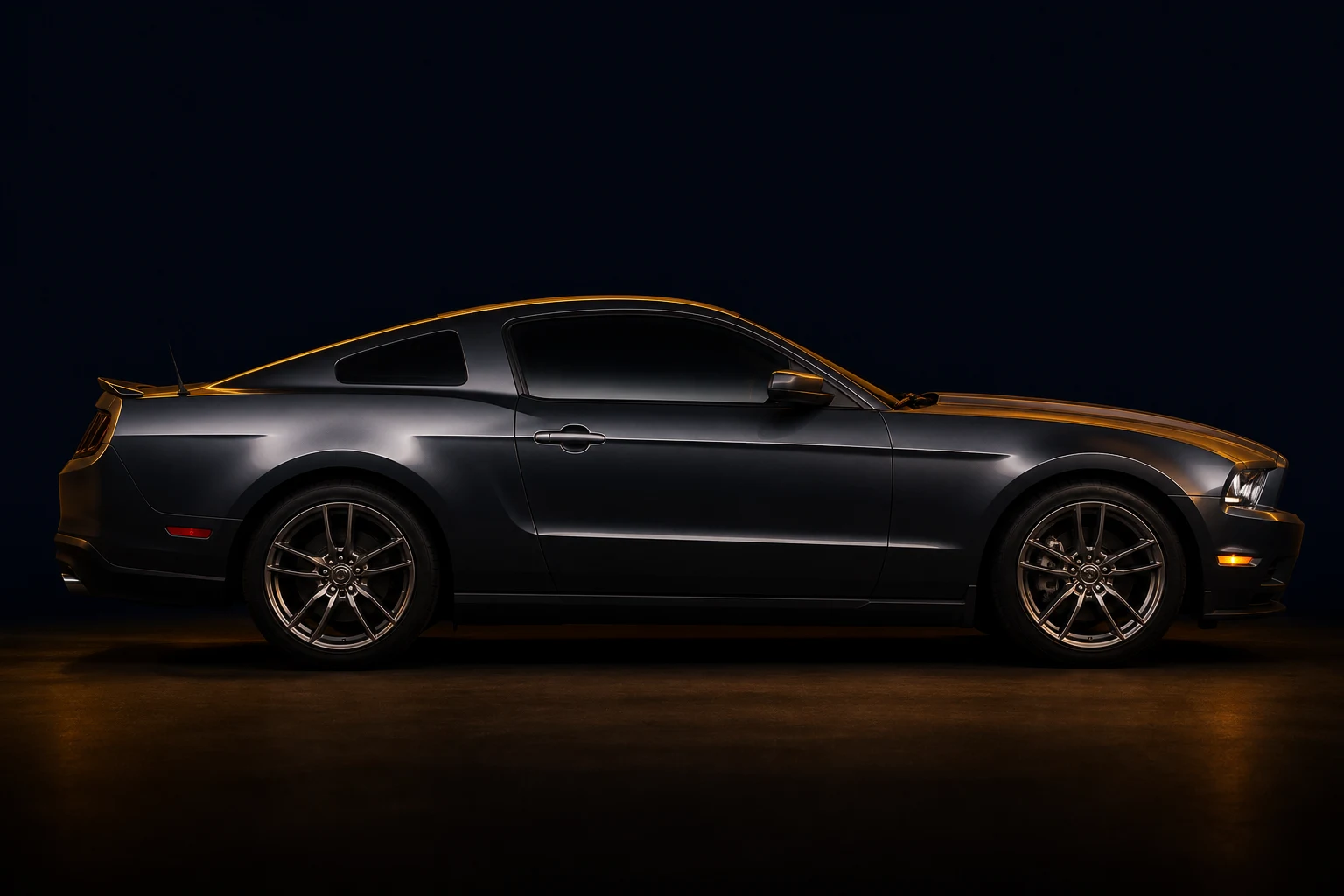
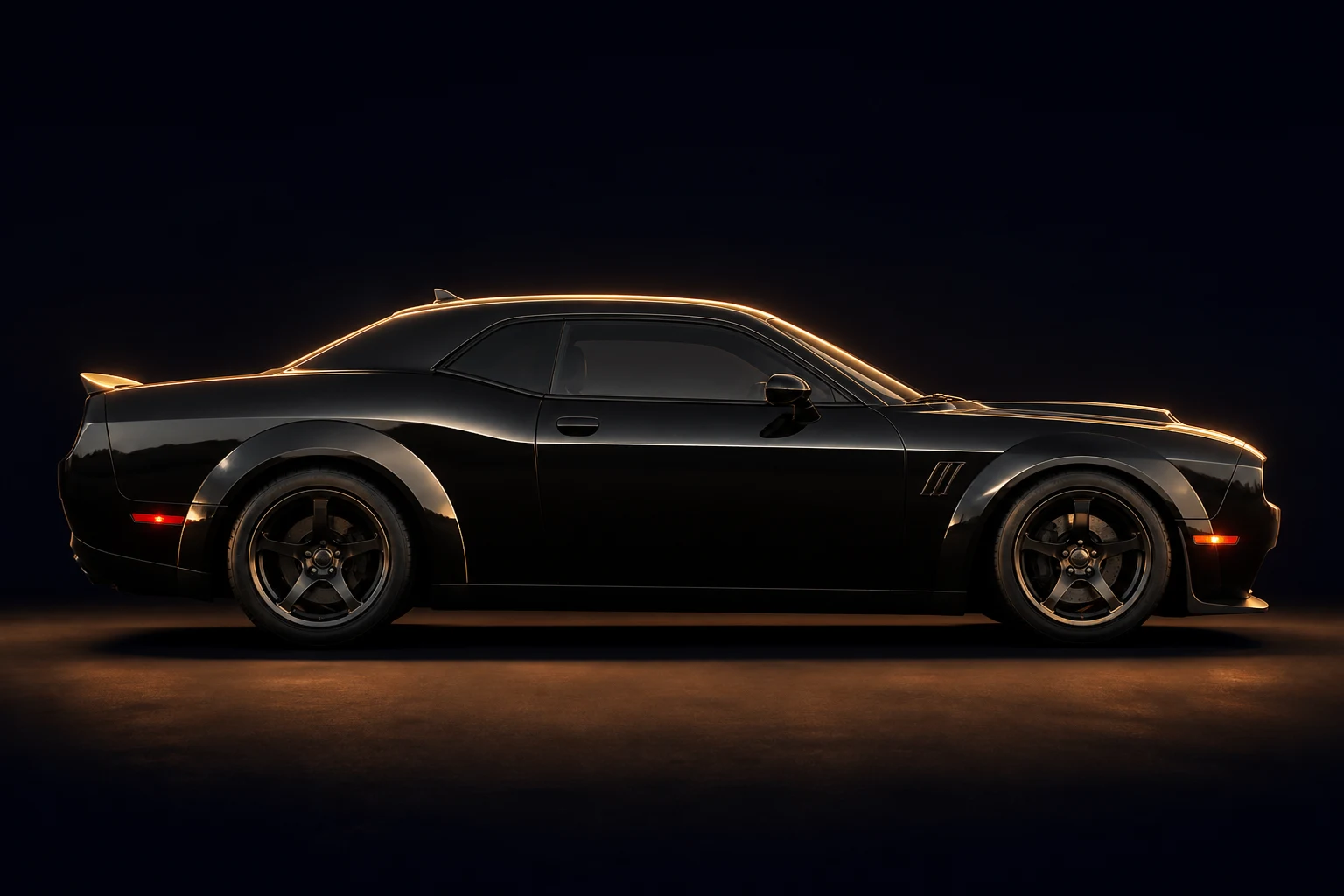
The Sabre Turbo's body is built from long horizontal lines and hard corners. A flat hood with a raised centre section and a functional scoop, a squared grille flanked by twin round headlamps, a roof with thick C-pillars and a small rear window, and a tail that ends abruptly in a chrome bumper and a pair of round lamp clusters per side.
The defining detail is the pair of stripes that run the full length of the car over the hood, roof and deck. Declasse offered them in a handful of colors and the aftermarket has since offered them in every color imaginable, but the classic combination remains a dark body with white or silver stripes, and that is what most Leonida owners choose.
The rear stance is deliberately jacked, with the back of the car sitting noticeably higher than the front to clear the wide rear tires. Inside, it is basic period fare - vinyl buckets, a floor shifter, round gauges in a painted metal dash, and an enormous thin-rimmed steering wheel that provides very little mechanical advantage over the unassisted steering at parking speeds.
Performance
The Sabre Turbo is the fastest naturally aspirated thing in the muscle class in a straight line, and it achieves that almost entirely through displacement. The engine produces an enormous flat plateau of torque from just above idle, which means the car pulls hard in any gear at any speed without needing to be worked, and the top-end pace is genuinely competitive with much more modern machinery.
Putting that power down is a separate problem entirely. The rear axle is live, the springs are soft, and the weight distribution is heavily biased toward the front, so the Sabre's rear tires spend a lot of their life spinning. Launching one cleanly is a genuine skill, and doing it on a damp Vice City street is close to impossible.
Handling is period-typical, which is to say it is not really handling at all. The car rolls heavily, the front tires wash wide, and the whole chassis takes a moment to respond to any input. Braking is poor even by muscle-car standards because of the mass. What the Sabre does have is stability at speed on a straight road, where its long wheelbase and heavy nose make it feel considerably more planted than its cornering behaviour would suggest.
Driving & Gameplay
The Sabre Turbo is a drag car with a license plate, so use it where that matters. On a long straight - the mainland highway, the industrial roads out past Port Gellhorn, the flat runs through Kelly County - it will keep up with cars that cost twenty times as much, and the acceleration between fifty and ninety is genuinely exceptional for the money.
Launch it with restraint. The single biggest performance gain available to a Sabre driver is learning not to floor it from a standstill, because a spinning tire produces no acceleration at all. Roll onto the throttle progressively through first and second and the car will actually be faster than one being driven violently, which is a lesson the east-side meets teach roughly once a week.
Treat corners as things to be got through rather than enjoyed. Brake in a straight line, well early, turn in slowly, wait until the car is pointed straight again, and only then use the engine. The Sabre punishes mid-corner throttle harder than almost anything else in Leonida, and the resulting spin happens with the whole mass of the car behind it.
Customization
The Sabre Turbo has the deepest classic-muscle catalog at Rideout Customs after the Tampa. Bodywork options include multiple hood and scoop designs, a supercharger that protrudes through the bonnet, chin spoilers, ducktail and pedestal rear wings, roll cages, side pipes, and a wheel range spanning period steels, chrome slots and modern deep-dish. The stripe configurator alone runs to dozens of combinations.
The mechanical side is where the state's builders spend their money. Full engine and transmission staging, brake conversions that bring the car into the modern era, and suspension work that finally connects the rear axle to the road. Turbo tuning is available and popular despite the name already implying it. Nitrous is the traditional east-side addition, though Rideout's techs will tell you that the chassis runs out of ability long before the engine runs out of power.
Locations
Sabre Turbos come to market through the classic dealer at the north Vice City marina, the used lots in Port Gellhorn, coastal auctions, and an enormous amount of private sale activity within the enthusiast scene itself, where good cars often change hands before they are ever advertised.
On the street the car is concentrated in the mainland and inland communities - Hamlet, the Grassrivers towns, the older residential parts of Kelly County - where the surviving population has always been highest. It is a mainstay of the east-side industrial road meets, and there is almost always at least one Sabre in the Sunday morning gathering in the Vice Beach lot.
In Leonida
The Sabre arrived in Leonida as ordinary transportation and became something else entirely once the larger engines became available. Through the model's peak years it was the car of the mainland highway racing scene, and a fair amount of the state's early street-racing culture was built around a few dozen heavily modified examples running the flat roads north of the bay after dark.
That lineage never really broke. The east-side meets outside Port Gellhorn are a direct continuation of it, and several of the cars running there have documented histories going back decades - the same chassis, different owners, continuously rebuilt. In a state where most of the exotic scene turns over every eighteen months, the Sabre community's continuity is genuinely unusual, and the people in it are quietly proud of that.
Trivia
- The 'Turbo' in the name refers to a Declasse trim package, not to any factory forced induction.
- The factory rear ride height is deliberately raised to clear the wide rear tires, giving the car its signature nose-down stance.
- Leonida's climate preserved far more Sabres than northern states retained, giving the region an unusually deep restoration scene.
- Some cars running at the east-side meets have documented ownership histories going back several decades on the same chassis.
- The unassisted steering requires genuine physical effort at parking speeds, which is why the factory wheel is so large.