Boats & Seaplanes
Pegassi Speeder
Pegassi · Powerboat
- Seats
- 2
- Top speed
- ~78 knots / 90 mph
- Price
- ~$395,000
- Mass
- 3,200 kg
- Real-world inspiration
- Cigarette Racing 42X / offshore go-fast boats
- Availability
- Purchase from the Vice City marina brokerage once you've unlocked coastal work, or take one from a private hotel dock - the theft is easy, keeping it is the hard part.
- Overview
- Pegassi's offshore missile - a deep-vee go-fast hull built for running the Leonida Keys at night with the marker lights off.
Description
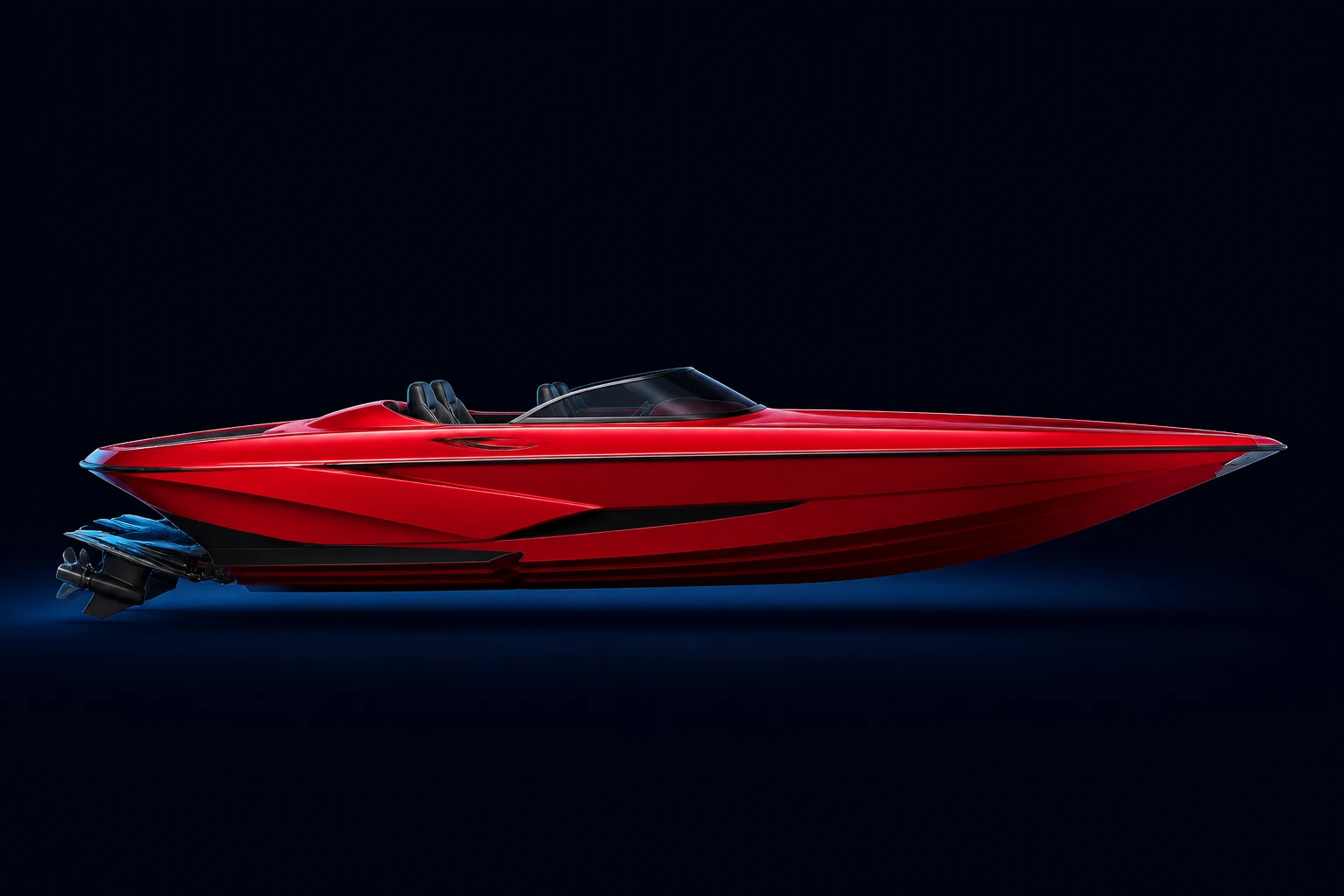
The Pegassi Speeder is the boat that Leonida's entire smuggling economy is quietly organized around. It is a long, narrow, deep-vee offshore hull with two seats, two engines, and almost nothing else, and it exists for exactly one purpose: to cover the water between a mothership sitting outside the shipping lane and a dock in the Keys before anyone with a radar screen can decide what they're looking at.
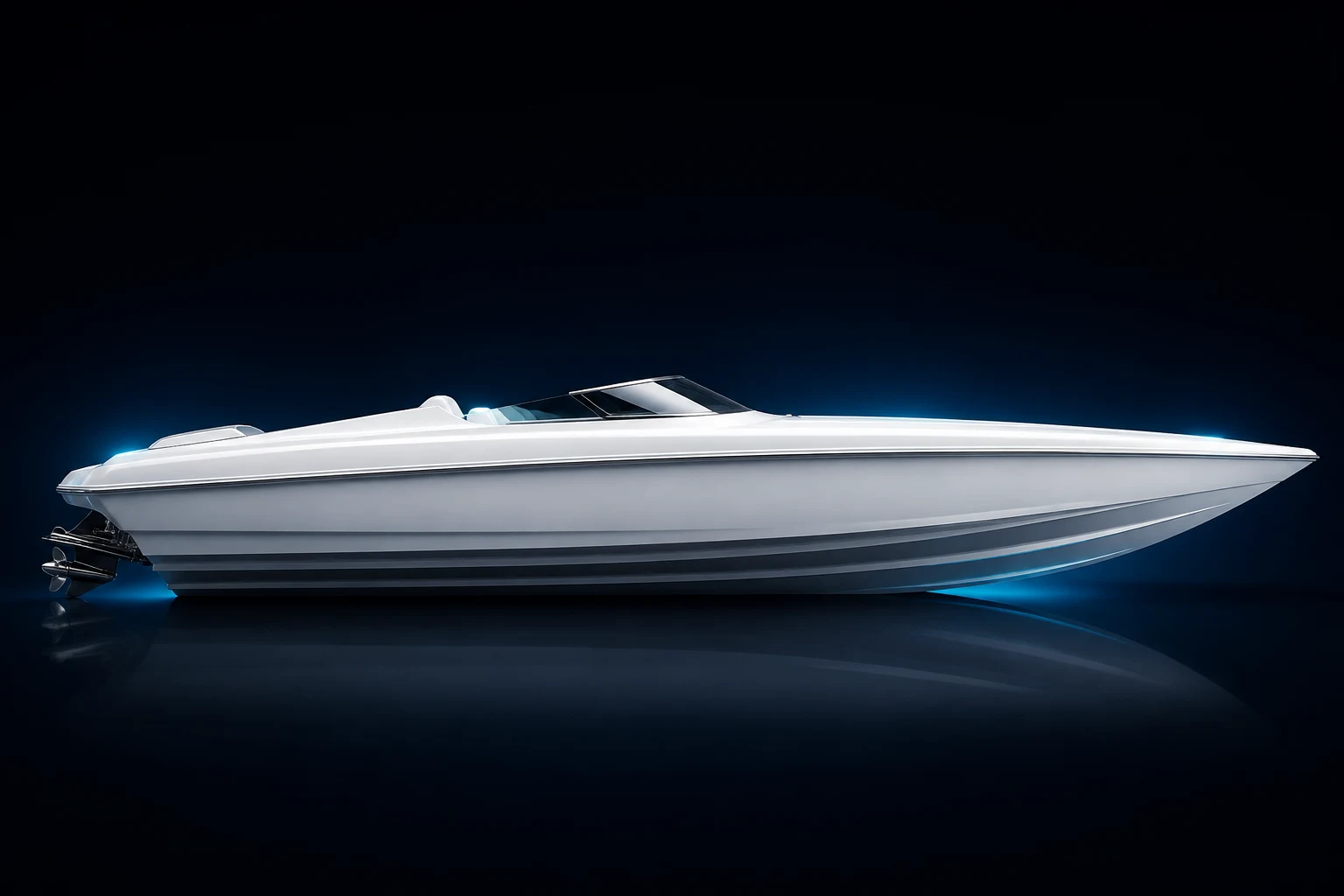
Pegassi's marine division builds it the way Pegassi builds everything else - with a total indifference to comfort and an obsessive interest in how fast a rich person can travel in a straight line. The hull is a slender wedge with a knife entry at the bow and a broad, flat run aft, the shape that lets it climb up onto plane in a couple of boat lengths and then skate across the top of the chop instead of plowing through it. On the mirror-flat water you get on a Leonida morning, it barely seems to touch the surface at all.
What makes the Speeder such a natural fit for Vice City fiction is how completely unremarkable it looks in daylight. Tied up in a marina slip between a fishing charter and a family cruiser, painted in a tasteful two-tone with a canvas cover snapped over the cockpit, it reads as a tax write-off belonging to a dentist. The moment the sun goes down and the throttles go forward, it becomes something else entirely - a low, dark shape throwing a rooster tail across the flats, moving faster than the boats sent to intercept it and drawing less water than most of them can safely follow.
If you play a coastal game - running product out of Port Gellhorn, servicing drop points in the Grassrivers, meeting a seaplane on a sandbar at 3 a.m. - the Speeder is not a luxury. It is the tool that makes those routes viable, and the first genuinely expensive purchase most players make that pays for itself.
Design
The proportions are the whole design. The Speeder is close to five hull-lengths long for its beam, a ratio that looks wrong on a trailer and looks inevitable at speed. The sheer line runs almost dead flat from the bow to the transom, broken only by a shallow scoop where the cockpit sits, and the deck is a single sculpted expanse of nonskid with recessed cleats so nothing catches a line at eighty miles an hour.
The cockpit is a two-person tandem well set well aft, sheltered behind a low wraparound windscreen that is more about deflecting spray than providing visibility. Bolstered offshore seats hold the driver and one passenger in place through the pounding; there are grab handles everywhere because you will need them. The instrument cluster is a compact bank of analog gauges - tach pair, oil pressure, water temperature, and a fuel gauge that drops visibly while you watch it.
Aft of the cockpit, the engine hatch is a long flush panel with vented scoops feeding air to the twin power plants underneath. Pegassi finishes the boat in the same jewel-tone metallics and hard-edged graphic stripes it uses on its road cars, and the family resemblance is deliberate: the Speeder is meant to sit in a slip in front of a Vice City hotel and communicate the same thing a Pegassi supercar communicates in the valet line.
Performance
The Speeder is the fastest thing most players will drive on Leonida water that isn't strapped to a jet ski's handlebars. Twin engines push it onto plane almost instantly and it keeps accelerating long after other boats have found their ceiling, holding a top end in the high seventies-knot range with a wake that looks like a contrail.
Handling is where it demands respect. A deep-vee hull leans into its turns like a motorcycle, which feels wonderful on open water and becomes genuinely dangerous in the Keys channels, where a hard turn at speed will bury the chine and slew the stern out. In heavy chop the ride is brutal - the narrow entry slices waves cleanly but transmits every impact straight up through the deck, and the boat will launch off the back of a swell if you don't back off. Learning to read the water in the Grassrivers, where a wrong line means a submerged root at seventy miles an hour, is a real skill.
The payoff is escape. Nothing in a routine coastal patrol can hold the Speeder in open water, and its shallow-water reach means you can duck into channels that anything larger has to go around. Its weaknesses are cargo space, which is essentially nonexistent, and durability - the hull is fast, not armored, and sustained fire will put you in the water.
Driving & Gameplay
The Speeder turns the entire southern half of the map into usable territory. Missions that involve meeting a boat offshore, servicing a drop, or clearing a dock before the heat arrives all become dramatically simpler when you own one, and the travel time between the Keys islands drops from a tedious slog to a genuinely enjoyable sprint.
In free roam it is the best escape vehicle in the game for anyone who plans ahead. Stash one in a marina near the areas you work, and any pursuit that reaches the waterfront ends the moment you clear the breakwater. Police boats simply cannot keep pace in open water, and air pursuit loses you fast if you run the mangrove channels where a helicopter can't get low enough to hold visual.
The counter-play is being caught cold. The Speeder has no armor, no weapons, and two exposed seats. If you're intercepted before you're on plane, or boxed into a dead-end channel, you're in the worst possible vehicle for a fight. Treat it as a getaway tool, not a gunboat, and it will never let you down.
Customization
Marina shops handle the Speeder as a styling project first. You get full hull paint with metallic and pearl finishes, a second color for the accent stripe running the length of the topsides, deck-graphic packages ranging from tasteful racing bands to full tropical wraps, and blackout or chrome options for the windscreen frame, cleats, and rails.
Functional work runs deeper than it looks. Propeller and drive-gear packages trade top-end speed against hole-shot punch, which matters enormously depending on whether your routes are open-water sprints or channel work. You can add a radar arch with a working scanner, low-glare navigation lighting for running dark, extra fuel bladders for long Port Gellhorn hauls, and a reinforced deck plate that buys a few extra seconds of survivability when the interception goes loud.
Locations
Speeders live where money and water meet. The Vice City marina district keeps a row of them in the outer slips, and the private docks behind the beachfront hotels almost always have one or two sitting under covers. Yacht basins on the north side of the causeway are the reliable place to find a well-optioned example if you're shopping without paying.
Out in the Leonida Keys, the boat takes on a different character - you'll find weathered, hard-used Speeders tied behind fish houses and stilt shacks, boats that have clearly done a hundred night runs and have the hull repairs to prove it. Port Gellhorn's commercial waterfront occasionally hides one among the working craft, and the Grassrivers ranger channels are where you'll encounter them abandoned, half-swamped, and full of stories.
In Leonida
Pegassi entered the marine market the way you would expect an exotic-car maker to: by building one boat, charging an obscene amount for it, and letting the reputation do the rest. The Speeder line began as a badge-engineering exercise with an offshore racing yard, which is why the hull has genuine competition pedigree underneath the boutique finish and why the engineering is far more serious than the price-tag styling suggests.
In Leonida the boat acquired a second, unofficial history. Marine enforcement bulletins along the Gulf coast have described the Speeder profile so many times that the shape itself is treated as probable cause in some jurisdictions, and dealers in Vice City have learned to be careful about who they sell to and what questions they ask. Pegassi's marketing department has never acknowledged any of this, which everyone involved understands to be a form of endorsement.
Trivia
- The Speeder's hull is narrow enough that it can slip between channel markers a patrol boat has to go around - a gap Keys runners call 'threading the sticks.'
- Pegassi paints the boat's accent stripe using the same code numbers as its road-car range, so a matched car-and-boat pair in identical livery is a recognized Vice City flex.
- The recessed cleats exist because early prototypes tore dock lines free at speed when a crewman forgot to stow them.
- Marina radar operators reportedly track Speeders by their acceleration curve rather than their size, since nothing else on the water climbs to speed that quickly.
- Its fuel burn at wide-open throttle is severe enough that long Port Gellhorn runs require a mid-route top-up, which is why so many Keys fuel docks stay open all night.