Motorcycles
Dinka Akuma
Dinka · Sport
- Seats
- 2
- Drivetrain
- Chain, RWD
- Top speed
- ~125 mph / 201 km/h
- Price
- ~$9,000
- Mass
- 210 kg
- Real-world inspiration
- Honda CBR1000RR
- Availability
- One of the cheapest sport bikes available, sold at dealerships statewide and abundant on the used market. Spawns frequently on residential streets and in parking areas, often unlocked.
- Overview
- The sensible superbike - the Akuma is nearly as fast as anything in the class, half the price, and far more forgiving.
Description
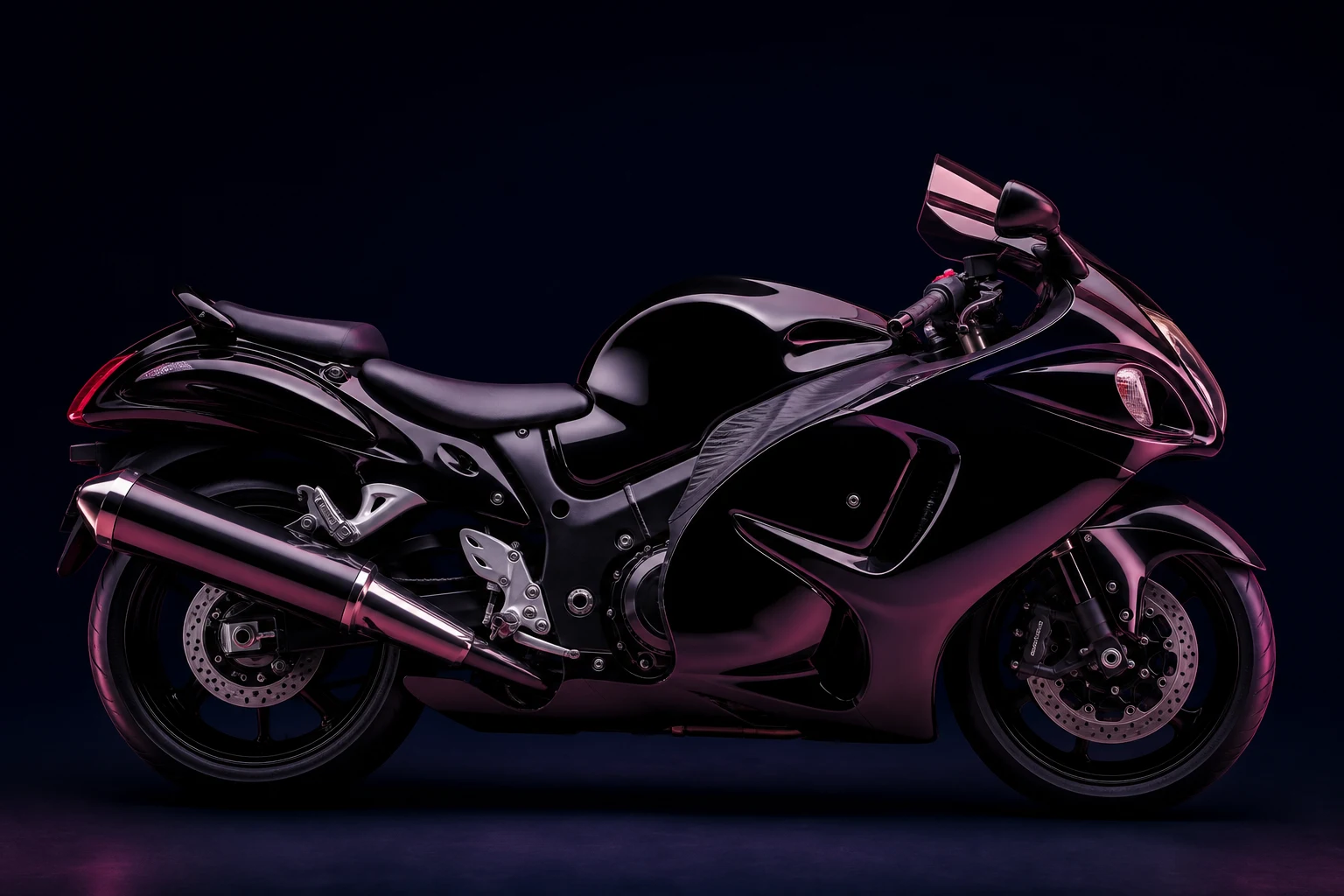
The Dinka Akuma is the motorcycle that quietly does everything well and never asks to be admired for it. It is a full-size sport bike with a smooth inline engine, an aerodynamic fairing, and a chassis tuned for stability over sharpness. It is not the fastest, not the most exotic, and not the loudest, and it will still get a competent rider across Leonida faster than most of the bikes that outrank it on paper.
Dinka's engineering philosophy shows in every part of the Akuma. Where Pegassi builds a race bike and adds lights, Dinka builds a machine that works reliably in every condition and then makes it fast. The power delivery is linear rather than explosive. The chassis is forgiving at the limit rather than knife-edged. The electronics intervene subtly rather than dramatically. It is a bike designed by people who assumed the rider might occasionally make a mistake.
That approach has made the Akuma the most common serious sport bike in Leonida after the Bati, and the one that experienced riders often end up on after they have owned something more dramatic. It handles Vice City traffic without punishing the rider, runs the Mount Kalaga switchbacks with real competence, and holds a comfortable pace on the long causeway straights. Nothing about it is exciting in isolation and everything about it works.
Reliability is the other half of the argument. Akumas accumulate mileage that would destroy more highly strung machinery, they tolerate deferred maintenance with remarkable patience, and they survive the salt and humidity of coastal Leonida better than almost anything with a chain drive. Second- and third-hand examples with enormous mileage still run correctly, which keeps the used market flooded and the entry price low.
Design
The Akuma's bodywork is smooth and functional, without the sharp creases and dramatic angles that define its Italian competition. A compact twin-headlight nose, flowing side fairings with subtle intake ducts, and a tail unit that tapers cleanly rather than aggressively. It looks fast in a way that does not draw attention, which is entirely consistent with the rest of the bike's character.
Underneath the panels, an aluminum twin-spar frame wraps around the engine, largely hidden from view. The exhaust runs low along the right side into a compact canister, or on some trims through an under-seat arrangement. The swingarm is conventional and braced, the suspension is fully adjustable at both ends on higher trims, and the whole assembly is packaged with an evident focus on mass centralization.
The riding position is the most important design decision. It is aggressive enough to be effective through corners but noticeably less extreme than the Bati's, with slightly higher bars and less weight on the wrists. That single change is why Akuma riders arrive at a destination able to use their hands. Instrumentation is a clear digital and analog combination, and the mirrors are actually large enough to see out of, which in this class counts as a radical decision.
Performance
Acceleration is strong and, more importantly, controllable. The inline engine builds power in a smooth linear curve that lets a rider use full throttle earlier and with more confidence than a peaky V-twin allows. It is marginally slower than the Bati off the line and often faster in the real world, because the Akuma's power is easier to actually deploy without lifting the front wheel or breaking traction.
Handling is stable and confidence-inspiring rather than razor sharp. The steering geometry is slightly more relaxed than the class norm, so it takes marginally more input to initiate a turn, and in exchange the bike holds its line with real composure and resists getting unsettled by mid-corner bumps. On rough coastal roads or the broken surfaces around Port Gellhorn's industrial areas, that composure is worth far more than a quicker turn-in.
Braking is excellent, with strong hardware and reliable modulation. Wet weather performance is a genuine strength, which is worth noting in a state where afternoon storms arrive without much warning - the linear power delivery and stable chassis make the Akuma one of the few sport bikes that stays predictable on wet asphalt. Top speed is high, and the fairing provides enough protection that sustained highway running is comfortable.
Driving & Gameplay
The Akuma is the best value proposition on two wheels and an excellent default for players who want sport bike performance without sport bike fragility. It does almost everything the Bati does, is easier to control at the limit, and costs a fraction as much to replace, which matters when the standard outcome for a motorcycle in a pursuit is destruction.
Its stability is the practical advantage. The Akuma recovers from bad lines, rough surfaces, and light contact more reliably than sharper bikes, and the smoother power delivery means panic throttle inputs are less likely to end the run. For players who are still learning the state's road network, that forgiveness translates directly into completed escapes rather than crashes.
The less aggressive riding position also makes it a better platform for shooting on the move, and it is comfortable enough with a passenger for extended drive-by work. Wet weather is where it separates from the competition most clearly - during Leonida's storms, the Akuma remains rideable at speeds where sharper bikes become genuinely unmanageable.
Customization
Rideout Customs offers a full sport bike catalog for the Akuma, and because the base bike is so cheap, building one out is genuinely economical. Exhaust systems, intake work, suspension adjustment kits, rearsets, clip-ons, and brake upgrades are all available. The engine responds well to tuning and the chassis has enough margin to handle the extra output without becoming nervous.
Cosmetics run the usual range: race liveries, single-tone paint, carbon-look bodywork, colored wheels, and tinted screens. Track-focused touches like tail tidies, frame sliders, and number plate panels are common. A significant portion of Leonida Akumas run mismatched replacement panels in different colors, the inevitable result of a cheap bike that gets dropped occasionally and repaired with whatever the wrecking yard in Port Gellhorn had in stock.
Locations
The Akuma is spread evenly across the state. Vice City street parking, apartment complexes in the inland suburbs, technical college and campus lots, motorcycle shops, and gas stations on every major route all produce them consistently. It is the most likely motorcycle to be found in a random residential driveway in Ambrosia.
Weekend riding groups on the Mount Kalaga roads always include several, and the parking areas at the scenic overlooks are reliable. Used dealerships along the inland highways stock them in quantity, usually high-mileage examples in faded paint that still run perfectly.
In Leonida
Dinka's motorcycle operation grew out of an engineering culture that treated reliability as a competitive feature rather than a baseline expectation. Early sport models were dismissed by enthusiasts as clinical and characterless, criticism the company essentially ignored while accumulating a reputation among riders who actually used their bikes daily and did not enjoy pushing them home.
The Akuma line established Dinka as a serious performance manufacturer by demonstrating that the reliability focus did not require a performance penalty. Successive generations closed the gap with the exotic competition on power and handling while keeping the durability, the sane ergonomics, and the low price. In Leonida, where salt air and constant humidity punish machinery relentlessly and where a lot of riders depend on their bike for work, the Akuma's virtues are more valuable than in almost any other market, and it has been a top seller in the state for as long as the model has existed.
Trivia
- Its mirrors are genuinely usable, which is rare enough in this class that reviewers mention it every generation.
- Multi-colored Akumas with mismatched replacement panels are so common in Leonida that they read as a legitimate factory option.
- Dinka reportedly tests its sport bikes with deliberately deferred maintenance schedules to validate how they behave when neglected.
- The smoother riding position means Akuma riders can typically still use their hands after a two-hour run, which Bati owners find suspicious.
- It is one of the very few sport bikes in the state that experienced riders recommend to beginners without adding a warning.