Motorcycles
Pegassi Bati 801
Pegassi · Super Sport
- Seats
- 2
- Drivetrain
- Chain, RWD
- Top speed
- ~130 mph / 209 km/h
- Price
- ~$15,000
- Mass
- 200 kg
- Real-world inspiration
- Ducati 1098 / Panigale lineage
- Availability
- Cheap and widely available from motorcycle dealerships across Leonida. Constantly spawns on city streets and outside bars and restaurants, making it one of the easiest fast vehicles of any kind to acquire.
- Overview
- Italian superbike perfection at an unreasonable price - the Bati is the default fast motorcycle of Leonida and deserves to be.
Description
The Pegassi Bati 801 is the motorcycle that every other motorcycle in Leonida gets compared to. It is not the fastest in a straight line, it is not the most comfortable, and it is not the most practical, but it is the most complete - a genuine superbike that combines top-tier acceleration, excellent handling, and a chassis balance that flatters riders far beyond their actual skill level. It is also, relative to what it does, absurdly cheap.
That combination has made the Bati ubiquitous. Delivery riders own them. Weekend canyon riders own them. People who have never ridden before buy one as a first bike and either learn very quickly or crash within a month. The bike does nothing to discourage either outcome. It is small, light, aggressively powerful, and completely willing, and the only thing standing between the rider and the consequences of that is judgment.
What elevates the Bati above the rest of the sport class is how it behaves at the limit. The chassis communicates constantly - through the bars, through the pegs, through the seat - so a rider always knows what the tires are doing. That feedback makes the bike feel predictable even when it is going very fast, and it is why experienced riders in Leonida keep choosing it over machines with better spec sheets. Confidence is worth more than horsepower on a road with traffic on it.
The Bati's character is inseparable from its sound. The Pegassi V-twin has a hard, uneven bark at idle that turns into a genuine howl at revs, and it announces itself down an entire Vice City block before it comes into view. Owners tune exhausts specifically to accentuate it. Whether that is a feature or a menace depends entirely on whether you own one.
Design
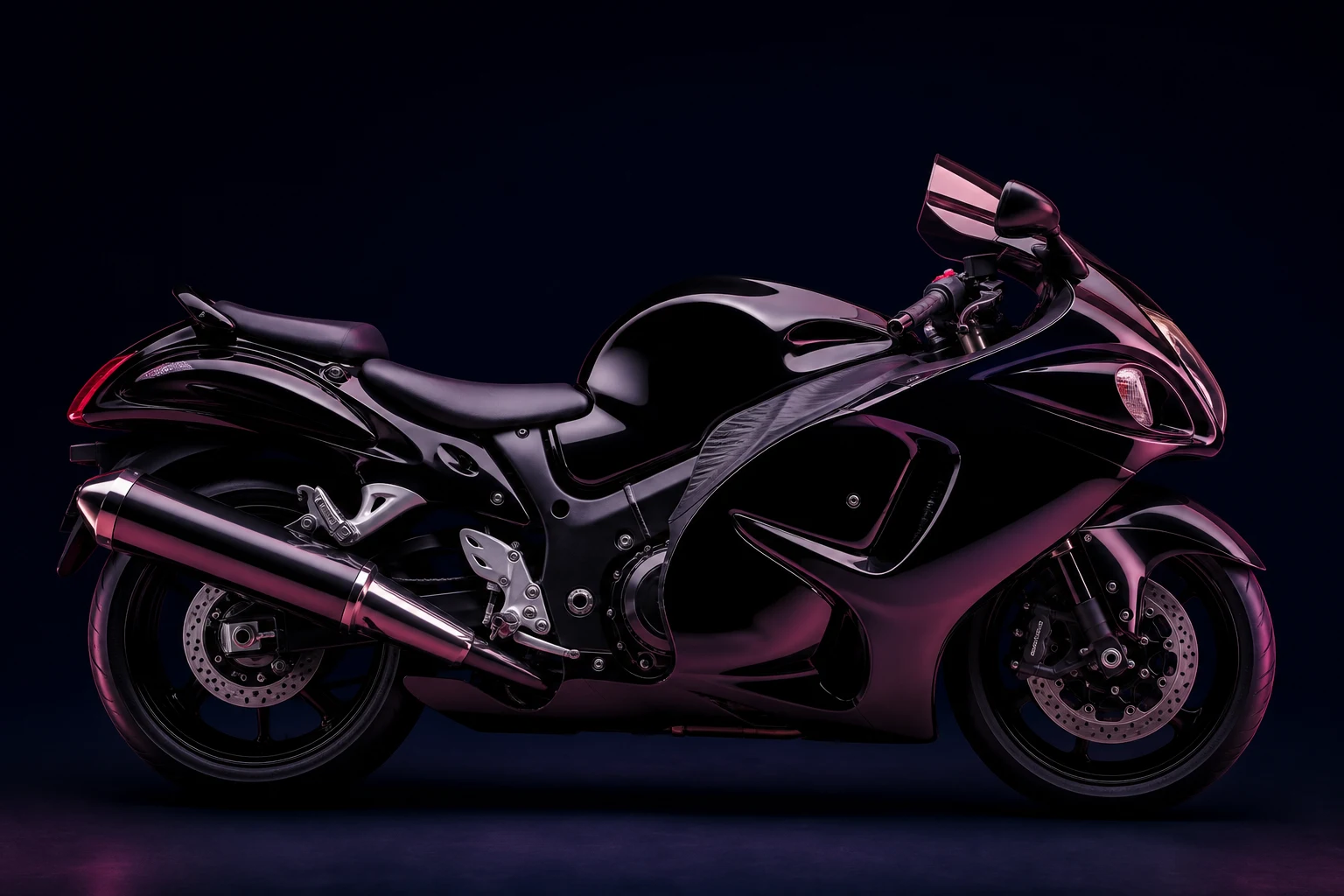
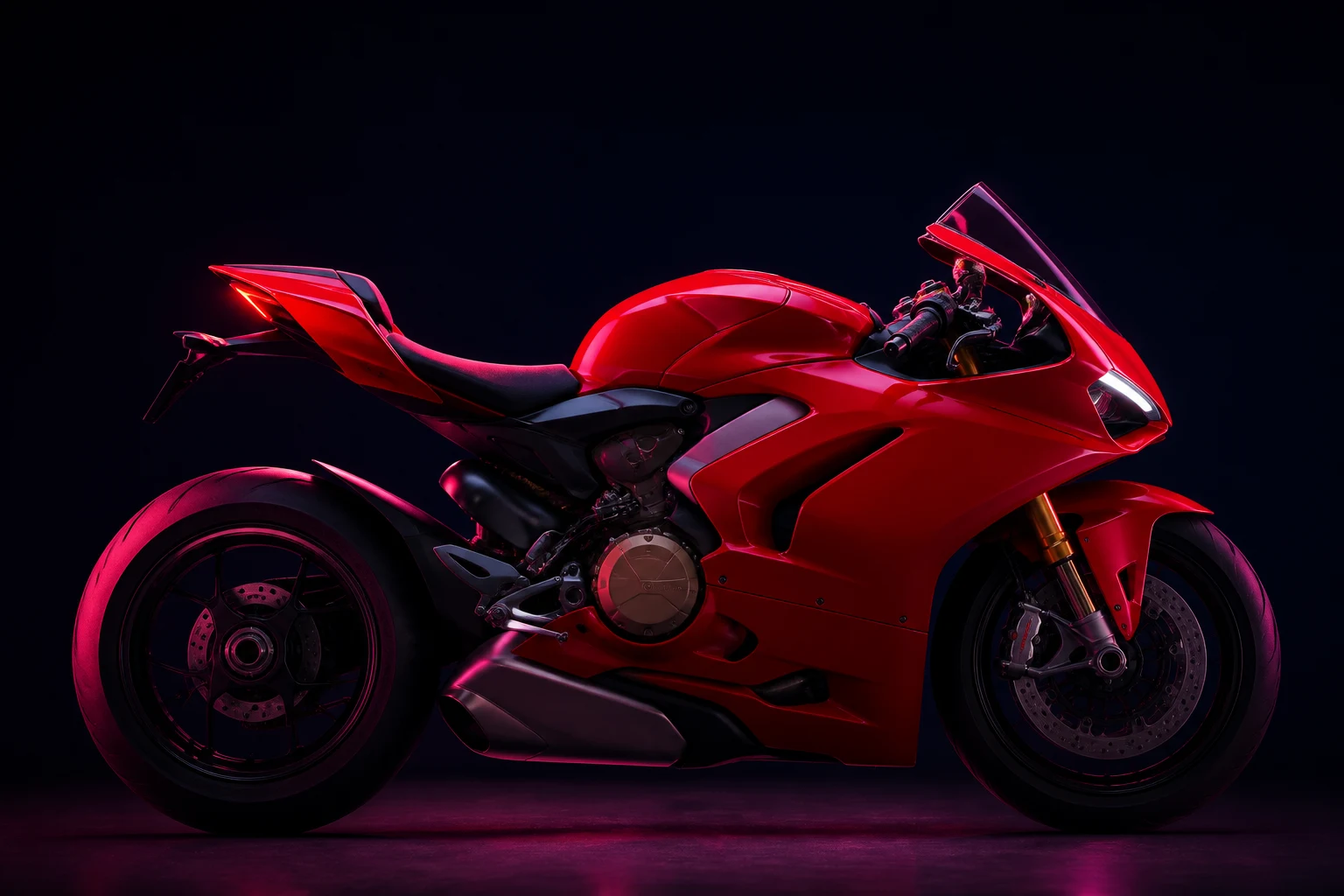
The Bati follows classic Italian superbike proportions with an almost religious commitment. A compact, tall, forward-biased mass with a steeply raked front end, a tank that the rider grips with their knees, a seat that sits high and pitches the body forward, and a tail unit that terminates abruptly above the rear wheel. Everything is packaged tightly, and the visual mass sits over the front wheel where the weight actually is.
The trellis frame is the defining structural and aesthetic element - exposed steel tubing painted in a contrasting color, visible through the fairing cutouts, functioning simultaneously as chassis and ornament. Underneath, a single-sided swingarm leaves the rear wheel fully exposed on one side, which is both a genuine engineering choice and the single most photographed detail on the bike.
Bodywork is minimal and functional. A small nose fairing with twin stacked headlights, narrow side panels that channel air around the engine, and an undertail or side-exit exhaust depending on trim. Paint is traditionally red, and the red examples outnumber every other color combined in Leonida by a wide margin. The instrument cluster is a compact digital unit angled steeply toward the rider, and the mirrors are small enough to be functionally decorative.
Performance
Acceleration is savage in a way that feels more immediate than the Hakuchou's because the bike is so much lighter. The Bati leaps rather than surges, the front wheel comes up under hard throttle in the first two gears without any provocation, and the power delivery through the mid-range is where most of the real speed lives. It reaches illegal velocity from a standstill faster than a rider can reasonably process.
Handling is the Bati's true advantage. Low mass, a short wheelbase, and steep steering geometry make it flick from side to side with almost no input, and it holds a chosen line through a corner with genuine precision. The switchbacks on Mount Kalaga and the tighter coastal roads north of Ambrosia are exactly where it shines - anywhere the Hakuchou struggles, the Bati thrives. Trail braking into a corner is stable and controllable.
Braking is excellent, with strong initial bite and enough feel to modulate right at the edge of the front tire's grip. Top speed is high but not class-leading, and the small fairing means the rider takes significant wind blast above a hundred, which limits how long a top-speed run stays comfortable. Wet weather is the real weakness - the aggressive power delivery and narrow tires make Vice City's afternoon storms genuinely dangerous on this bike.
Driving & Gameplay
The Bati is the best all-around motorcycle in the game and the correct default choice for most situations. It is fast enough to outrun pursuit, small enough to filter through gridlocked Vice City traffic, agile enough to take alley shortcuts and stairways, and cheap enough that losing one costs nothing. There is no scenario in which bringing a Bati is a mistake.
Urban escapes are its specialty. The combination of acceleration and agility lets a rider exploit gaps that no car can follow into, and the light weight makes curb hops, sidewalk transitions, and tight U-turns reliable rather than risky. A pursuit through downtown Vice City on a Bati is close to a formality if the rider knows the alley network, and the bike recovers from mistakes fast enough that a wrong turn is not fatal.
The classic risk applies: a single hard impact ends the run. The Bati is unforgiving of contact, and the same agility that makes it excellent in traffic means small inputs at speed produce large results. Riding with a passenger for drive-by work is highly effective, but the aggressive rider position and the bike's twitchiness make shooting while riding solo unreliable.
Customization
Rideout Customs supports the Bati more thoroughly than almost any other motorcycle in the state, largely because so many exist. Exhaust systems are the most common first modification and dramatically change both sound and power delivery. Beyond that: rearset controls, clip-on bars, tail tidies, undertail conversions, adjustable suspension, brake upgrades, and lightweight forged wheels are all available and all meaningful.
Cosmetic options run deep. Race replica liveries, single-tone competition colors, carbon fiber bodywork, colored trellis frame finishes, and anodized hardware in every shade. Number plates on the tail and taped headlights are a popular affectation among riders who never take the bike anywhere near a track. The most common Leonida build is stock bodywork in red with an aftermarket exhaust, tail tidy, and frame sliders, which is the configuration that survives contact with a curb best.
Locations
The Bati is everywhere in Vice City. Apartment building sidewalks, restaurant curbs, beach district street parking, and outside every bar in the nightlife corridor. Motorcycle dealerships stock them heavily, and there are usually several parked outside any gathering of riders in the state.
Outside the city, weekend group rides on the Mount Kalaga roads and coastal routes toward Ambrosia produce heavy concentrations, often a dozen or more moving together. Delivery riders working the Vice City core provide a constant supply during business hours, usually with a top box bolted to the tail and paint that has seen better days.
In Leonida
Pegassi's motorcycle division has always operated as a semi-independent operation with its own engineering culture, and the Bati line came out of that culture's long insistence that a road bike should be a race bike with lights bolted on. Early versions were criticized for being uncomfortable, temperamental, and expensive to maintain, all of which was true and none of which mattered to the people buying them.
The 801 designation marked the point where Pegassi finally made the formula accessible without diluting it. Production volume increased, prices dropped substantially, and reliability improved enough that ordinary riders could own one without a dedicated mechanic. What did not change was the fundamental character - the trellis frame, the V-twin, the single-sided swingarm, the aggressive geometry. In Leonida, where the mix of dense city and twisting coastal roads suits it perfectly, the Bati went from an enthusiast's choice to the default motorcycle within a single model cycle and has never given the position back.
Trivia
- Red Batis outnumber every other color combined in Leonida, to the point that non-red examples get asked about at gas stations.
- The single-sided swingarm exists partly for quick wheel changes in racing and mostly because it looks extraordinary from the right side.
- Its V-twin idle is uneven enough that new owners regularly bring the bike back to the dealer convinced something is broken.
- Delivery riders in Vice City favor it despite it being the least practical possible choice, purely because it beats traffic.
- Frame sliders are the most-purchased accessory in the state for this model, which says something about how it is typically ridden.