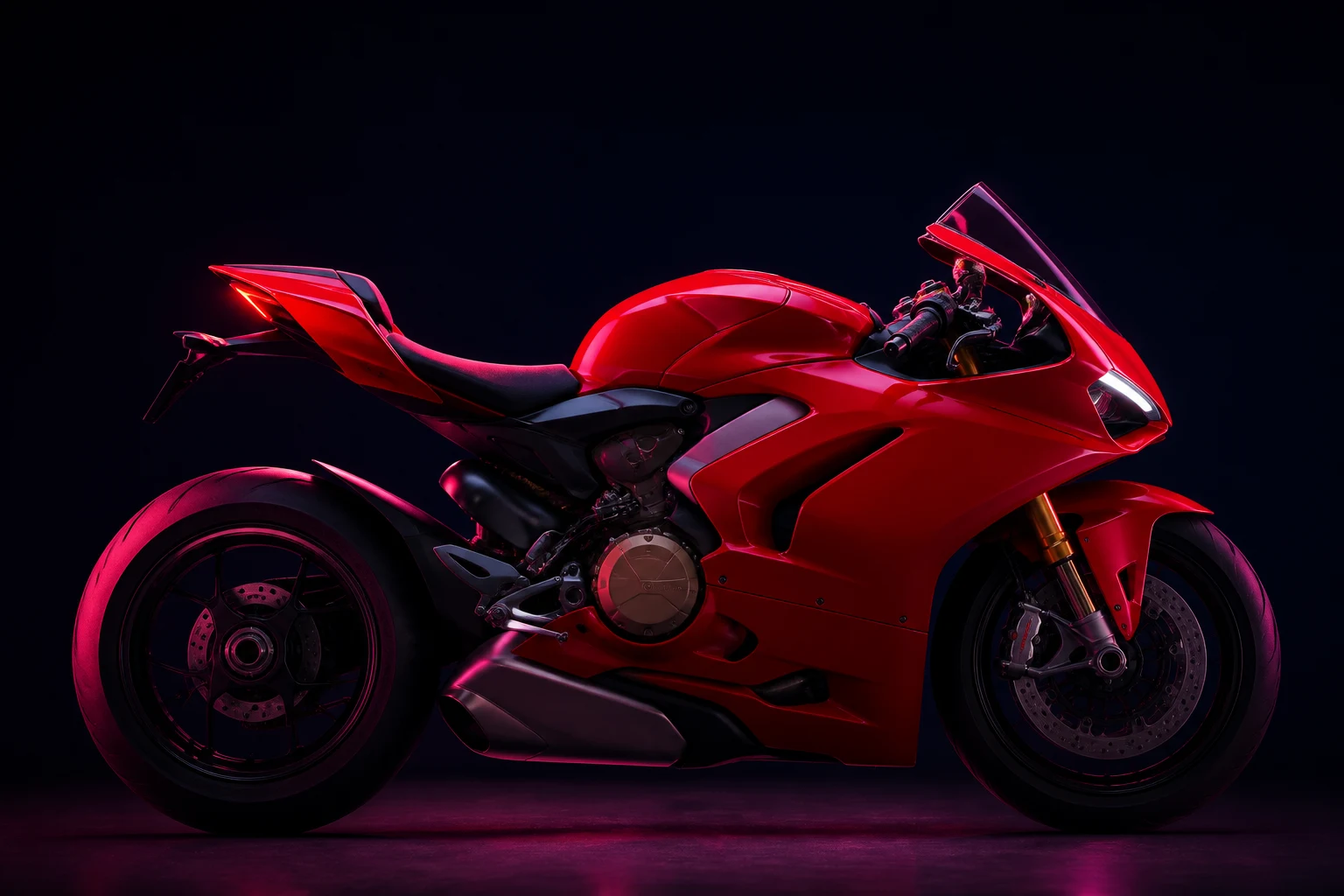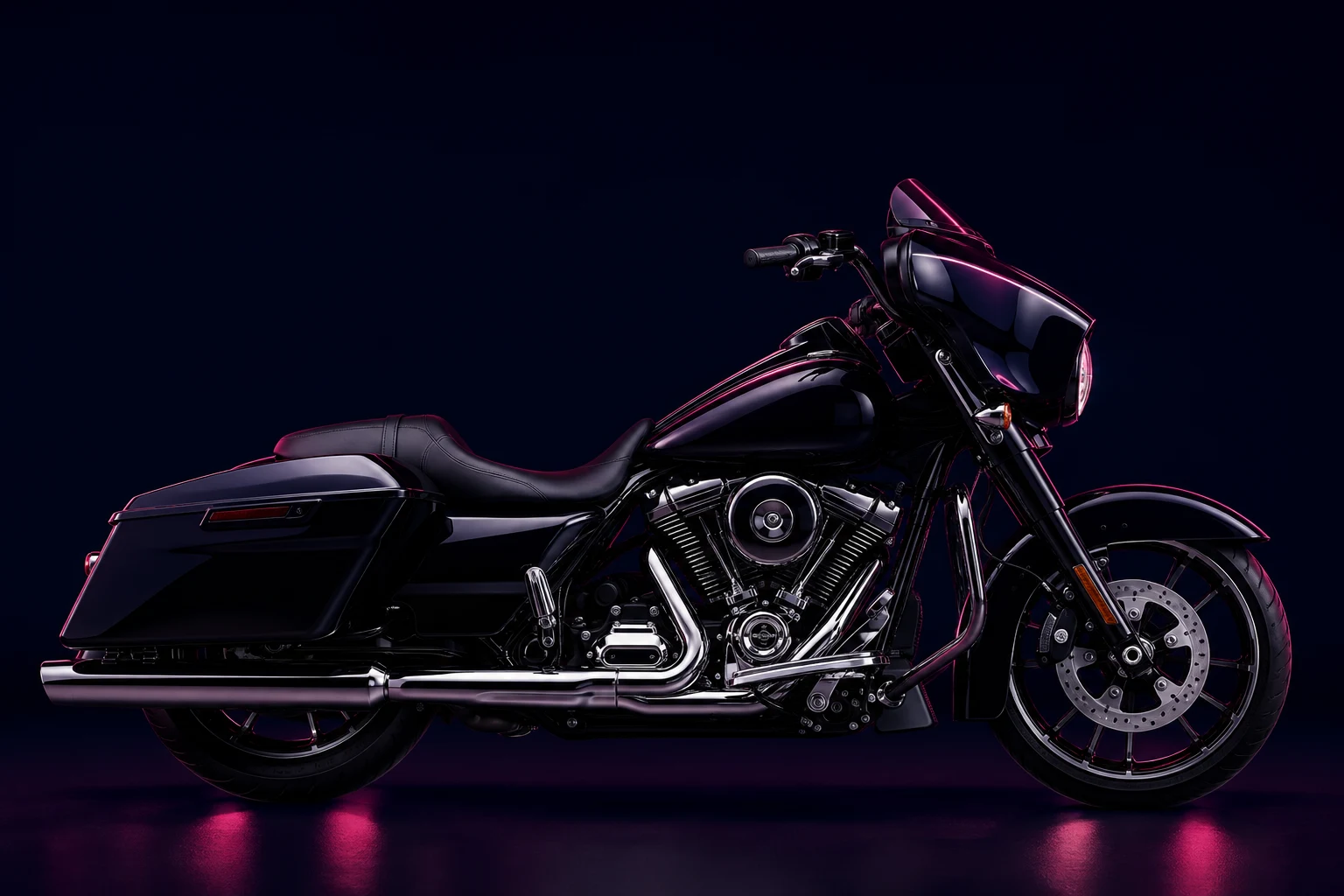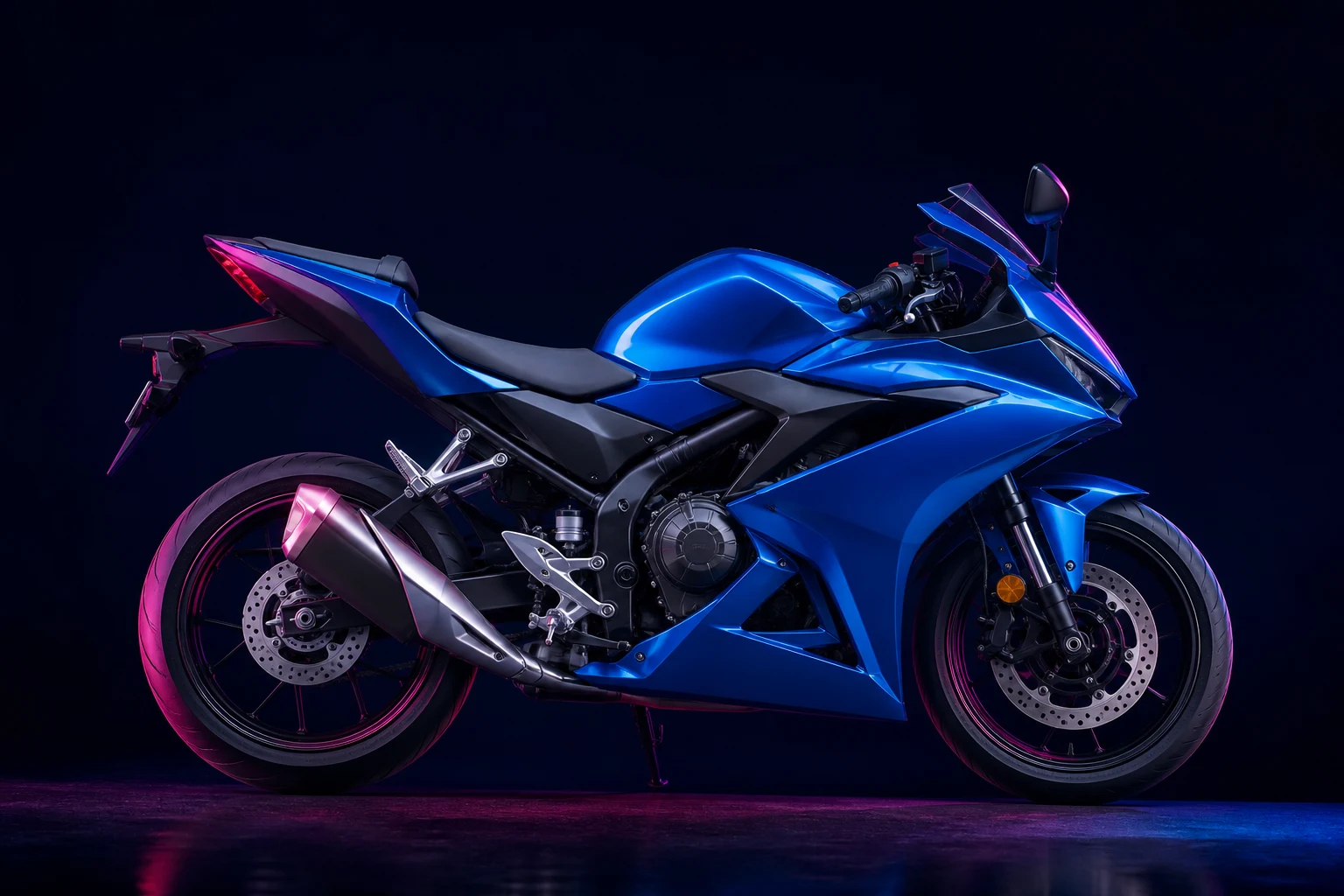
Motorcycles
Shitzu Hakuchou
Shitzu · Hyper Sport
- Seats
- 2
- Drivetrain
- Chain, RWD
- Top speed
- ~135 mph / 217 km/h
- Price
- ~$82,000
- Mass
- 220 kg
- Real-world inspiration
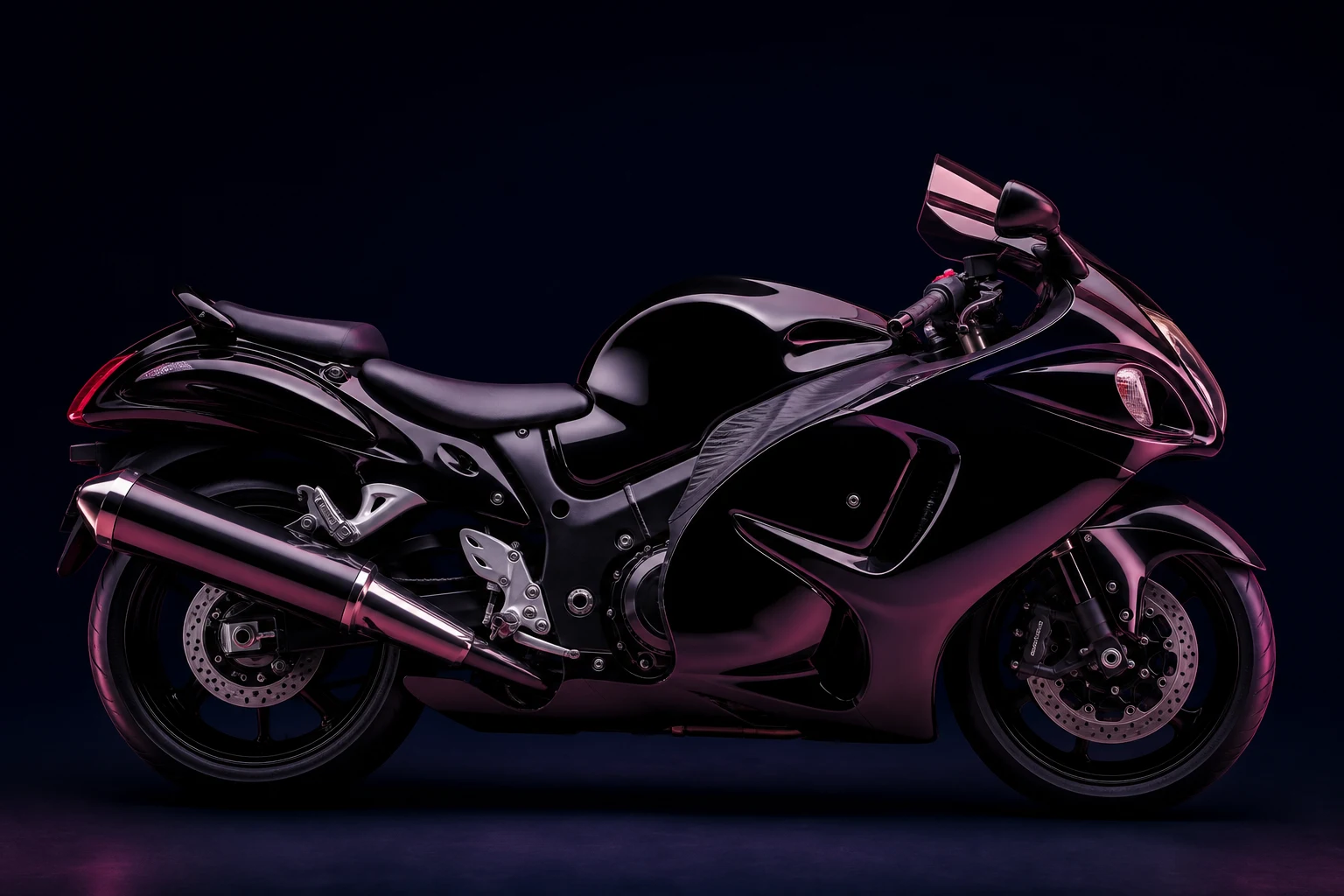
- Suzuki Hayabusa
- Availability
- Purchase from high-end motorcycle dealerships in Vice City at a premium price. Occasionally appears at late-night gas stations and informal gathering spots along the interstate, though owners rarely leave them unattended.
- Overview
- The fastest thing on two wheels in Leonida - a long, low hyper-sport built for the causeway straights and nothing else.
Description
The Shitzu Hakuchou exists because someone at Shitzu asked what would happen if a motorcycle stopped worrying about corners entirely. The answer is a long-wheelbase, aerodynamically obsessive machine with a wind-tunnel-derived fairing, a fully enclosed front end, and an engine that pulls with an intensity that genuinely reorganizes a new rider's understanding of acceleration. It is the top-speed benchmark of Leonida and nothing else on two wheels comes close.
The Hakuchou's natural habitat is the long straight. The Keys causeway at four in the morning, the interstate stretch between Vice City and Port Gellhorn, the industrial access roads around the freight terminals - anywhere with a mile of clear asphalt and no reason to slow down. Riders who own one talk about it in terms of distances rather than lap times, and the standard Hakuchou story involves a stretch of road, an empty hour, and a speed nobody wants written down.
What makes it more than a novelty is how usable that speed is. The long wheelbase and low center of gravity make the bike remarkably stable at velocities where lighter sport bikes get nervous. The fairing genuinely works, pushing the wind off the rider's chest and shoulders so that sustained high-speed running is tiring rather than punishing. It is a hyper-sport that can actually be ridden hard for an hour instead of a minute.
The cost is everything that happens below sixty. The Hakuchou is heavy, physically long, and reluctant to change direction. Filtering through Vice City traffic requires real effort, low-speed maneuvering is clumsy, and the riding position puts weight on the wrists in a way that becomes miserable in stop-start conditions. Nobody buys one for the commute. They buy it for the four minutes a week when the road opens up and the bike does something no car in the state can answer.
Design
The silhouette is unmistakable and unlike anything else in the class. Where most sport bikes are short, tall, and angular, the Hakuchou is long, low, and rounded, with bodywork that flows continuously from the nose to the tail in a single aerodynamic gesture. The front fairing fully encloses the forks and headstock, the mirrors are integrated into the fairing structure, and the windscreen is a shallow bubble that the rider tucks entirely behind at speed.
The tail section is the visual signature. It rises in a smooth hump behind the rider, tapering to a point that houses a slim LED unit, and the effect is closer to a fighter aircraft fuselage than a motorcycle seat unit. Twin exhausts exit low on both sides, kept deliberately compact so they do not disturb the airflow the rest of the bodywork works so hard to manage.
Detail work is dense. Vents cut into the fairing sides, a raised spine running down the tank, and paint schemes that emphasize length through horizontal graphic elements. The instrument cluster is analog-dominant with a large central tachometer, and the speedometer runs to numbers that are frankly optimistic on any public road in Leonida. Even the mirror stalks are shaped to reduce drag, which tells you exactly where the design priorities were.
Performance
Acceleration is the headline and it deserves the attention. The Hakuchou launches with a ferocity that requires active management - the front wheel wants to leave the ground through the first two gears and only the long wheelbase keeps it planted. Roll-on acceleration from highway speed is even more startling, since the bike pulls just as hard from eighty as it does from thirty and does it without needing a downshift.
Top-end performance is where it stands alone. Where other bikes run into an aerodynamic wall, the Hakuchou keeps building, and it will hold a top-speed run for as long as the road allows without becoming unstable or requiring constant correction. Straight-line stability at maximum velocity is genuinely exceptional, which is the single most important quality a bike this fast can have.
Handling is the compromise. The Hakuchou is heavy by class standards and the long wheelbase makes it slow to turn in and reluctant to change direction mid-corner. It carries speed through fast sweepers beautifully - the Keys causeway curves are perfect for it - but tight technical roads like the switchbacks on Mount Kalaga expose the weight badly. Braking is strong but has to work against serious momentum, so late braking is a poor strategy on a bike that takes this long to slow down.
Driving & Gameplay
The Hakuchou is the single best escape vehicle in Leonida provided the escape happens on open road. Nothing pursuing can match its top speed, and the acceleration means the gap opens immediately rather than gradually. On the interstate or the causeway, a Hakuchou escape is essentially uncontested - point it away from the problem and the problem stops being relevant within thirty seconds.
In the city it is considerably worse. The length and weight make lane filtering slow, tight turns require setting up in advance, and the low ground clearance means curb-hopping and sidewalk shortcuts are unreliable. Riders who treat it like a nimble bike in downtown Vice City end up on the pavement. The correct play is to use city roads only to reach a highway and then let the bike do what it was built for.
Rider exposure is total, as with any motorcycle. A single impact ends the run, and at Hakuchou speeds the margin for error is measured in fractions of a second. Drive-by shooting from the saddle works but the aggressive riding position makes it awkward, and a passenger is far more effective in that role than the rider.
Customization
Rideout Customs offers a substantial catalog, most of which is about the fairing. Full aftermarket body kits, extended swingarms for even greater stability under launch, tinted screens, undertail exhaust conversions, and lowering kits are the popular functional choices. The extended swingarm build is the most transformative, turning an already stable bike into a dedicated straight-line machine that is essentially unrideable in the city.
Cosmetically, the Hakuchou is a paint canvas. Multi-layer candy finishes, ghost graphics that only appear at certain angles, chrome and polished frame components, and full LED underglow are all common. Wheel options run from lightweight forged sets to chrome multi-spoke designs that add weight but look the part at a standstill. Performance work covers exhaust systems, intake, engine tuning, and brake upgrades, and the engine responds well enough to tuning that fully built examples become genuinely intimidating.
Locations
The Hakuchou clusters around late-night riding culture. Gas stations along the interstate corridors after midnight, the parking areas at either end of the Keys causeway, industrial roads near Port Gellhorn where informal runs get organized, and specialty sport bike dealerships in Vice City are the reliable spots.
Daytime sightings are rarer and usually parked - outside apartment buildings in the beach districts, at bike shops, and under covers in condo garages. Group rides happen on weekends and produce concentrations of a dozen or more heading out toward the Keys or north past Ambrosia, which is the single easiest time to find one.
In Leonida
Shitzu developed the Hakuchou during a period when manufacturers were openly competing on top speed with no agreed limits, and the brief was straightforward to the point of recklessness: build the fastest production motorcycle available. Engineering resources went overwhelmingly into aerodynamics, because the team recognized early that power was easier to find than the ability to use it.
The resulting bike was fast enough that it effectively ended the competition, and informal industry agreements to limit top speeds followed shortly after - agreements the Hakuchou is widely credited with causing. That history gave the bike a mythology that has long outlasted its original model cycle. Successive generations have refined the aerodynamics and added electronics without ever abandoning the long, low, fully faired formula, because the formula was correct the first time. In Leonida, where the geography provides more long straight road than almost anywhere, the Hakuchou found a market that appreciated it immediately.
Trivia
- The Hakuchou's speedometer reads well past what the bike will actually do, a habit the industry never abandoned.
- Its fairing shape was refined in a wind tunnel to the point that Shitzu's engineers reportedly argued over the mirror stalk profiles for weeks.
- Extended swingarm builds are so common on the Keys causeway runs that unmodified examples look short by comparison.
- Riders describe the roll-on acceleration from highway speed as more alarming than the standing launch, which is unusual for the class.
- It is one of the few motorcycles in Leonida where a passenger is genuinely more comfortable than the rider on a long run.