Motorcycles
Dinka Double-T
Dinka · Middleweight Sport
- Seats
- 2
- Drivetrain
- Chain, RWD
- Top speed
- ~122 mph / 196 km/h
- Price
- ~$12,000
- Mass
- 205 kg
- Real-world inspiration
- Middleweight sport bike, CBR600RR / R6 school
- Availability
- Affordable and widely available from dealerships and the used market. Commonly found at riding pullouts, motorcycle shops, and residential parking across Vice City and Ambrosia.
- Overview
- Smaller engine, sharper chassis - the Double-T is the corner specialist that embarrasses bigger bikes on any road with turns in it.
Description
The Dinka Double-T is built on a premise that most riders in Leonida discover too late: an enormous engine is only useful on the small fraction of road where you can actually open the throttle. Everywhere else, what matters is weight, agility, and a chassis that responds instantly. The Double-T is a middleweight - less displacement, less peak power, and a frame tuned specifically for corner speed - and on the right road it is faster than machines that would destroy it in a straight line.
The right road, in Leonida, means the Mount Kalaga switchbacks, the twisting coastal sections north of Ambrosia, and the tangled surface streets of Vice City. On all of them, the Double-T's ability to change direction and carry corner speed makes it genuinely quicker point to point than a Hakuchou and a real match for a Bati. It rewards a rider who commits and punishes one who does not, which is exactly what its buyers want.
The engine character is the defining experience. The Double-T makes very little power at low revs and demands to be worked hard, spinning to a redline that arrives high and loudly. Riders who keep it in the top third of the rev range find a bike that feels alive and urgent. Riders who short-shift and lug it around find something that feels underpowered and disappointing. It is a machine with a specific correct way to be ridden.
That demand for engagement is why the Double-T has such a devoted following. It requires attention, gear selection, and commitment through corners, and it gives back a level of feedback and involvement that bigger bikes deliver only at speeds that would end in prison. It is also cheap, reliable in the Dinka tradition, and light enough for a rider to pick up alone after an incident - which, given how it tends to be ridden, is a practical consideration.
Design
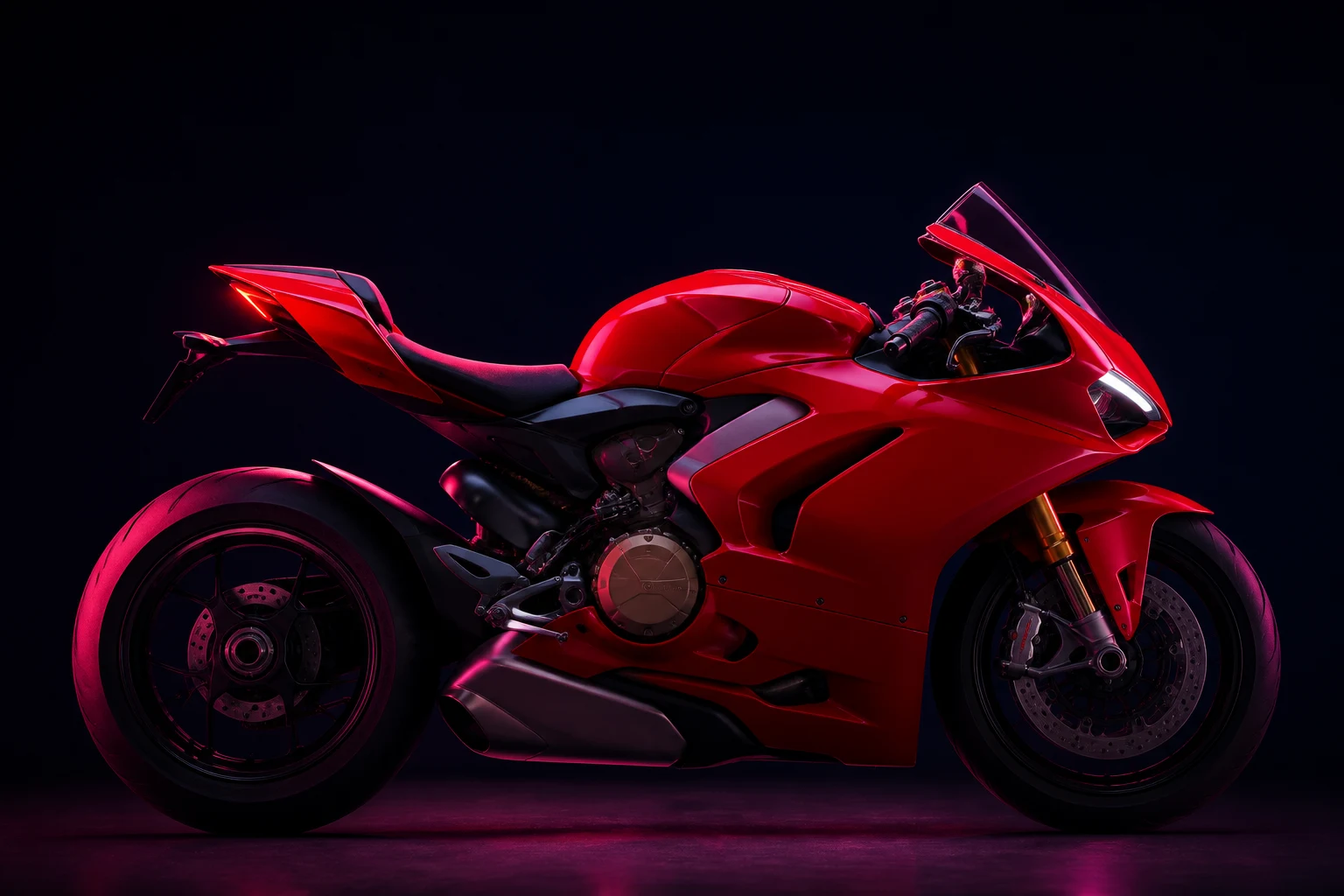
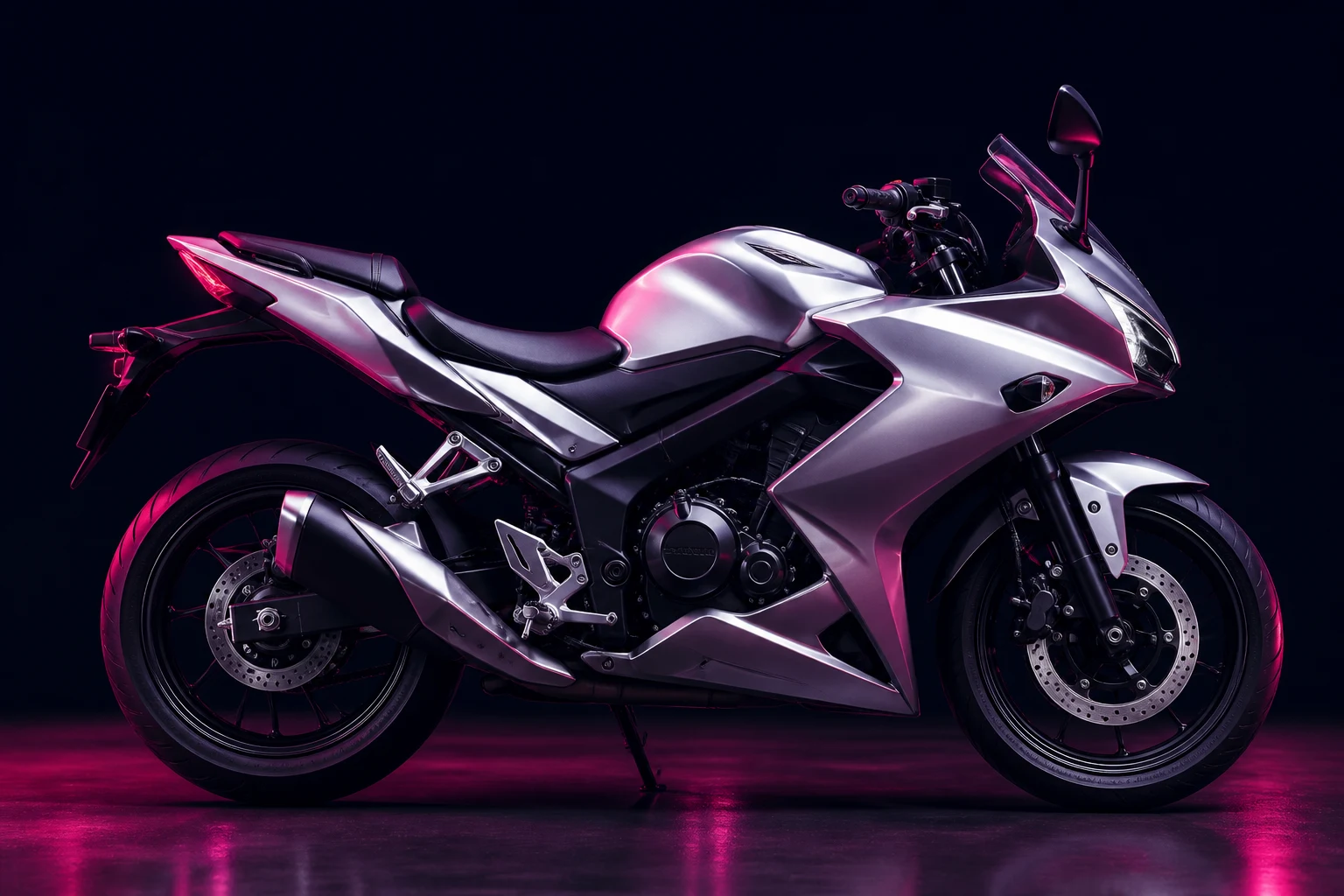
The Double-T is visibly smaller than a full-size superbike and looks it from any angle. A compact nose with stacked headlights, tight side fairings wrapped closely around a narrow engine, a short tank, and a tail unit that ends abruptly. The proportions are dense and purposeful, and the whole bike appears to have been shrink-wrapped around its mechanical components.
The narrowness is the most functional aspect of the design. The engine is physically slim, which lets the fairings pull in tight and gives the bike a frontal area noticeably smaller than its bigger siblings. That matters for filtering through Vice City traffic and for the top speed the modest engine manages to reach. The rider tucks into a small space and the fairing genuinely covers them.
An aluminum frame runs down each side of the engine, occasionally visible through cutouts, and the swingarm is long relative to the wheelbase to help traction on corner exit. Exhaust is typically a compact underslung or side-exit canister. Trim is minimal and paint schemes are usually bold - race replica graphics are the norm, and the Double-T tends to be seen in brighter colors than the rest of the Dinka range.
Performance
The engine is the defining variable. Below the midpoint of the rev range the Double-T feels genuinely slow, and riders coming off a bigger bike will find the first few miles underwhelming. Above that point it comes alive, pulling hard to a high redline with an intensity that makes the modest displacement irrelevant. The correct technique is to keep it spinning and use the gearbox constantly, which is more work and considerably more fun.
Handling is where the bike justifies itself completely. Low mass, a short wheelbase, and steep geometry make it change direction faster than anything else in the catalog, and the light steering means a rider can adjust mid-corner without upsetting the chassis. Corner entry, apex, and exit all happen with a precision that bigger bikes cannot match, and on a technical road the Double-T can be ridden closer to its limit than something with twice the power, simply because that limit is reachable.
Braking is strong and the low mass makes stopping distances genuinely short. Top speed is the obvious limitation - it runs out of engine well before the Bati or Hakuchou, and on the long causeway or interstate straights it gets left behind decisively. Wet weather handling is good, since the modest power output means traction is rarely the limiting factor.
Driving & Gameplay
The Double-T is the best motorcycle in the game for technical terrain. On the mountain roads and in dense urban grids, its agility lets a rider maintain speed through sequences of corners that force everything else to slow, and pursuit vehicles simply cannot follow the lines it takes. For an escape through Mount Kalaga or the older Vice City street network, nothing is faster.
Its low mass has a second benefit that players underestimate: recovery. The Double-T is easy to correct when a line goes wrong, easy to place precisely between obstacles, and light enough that a minor incident does not automatically end the run. That forgiveness through mistakes is worth more in practice than the top speed it gives up.
The weakness is open road. On the interstate corridors or the Keys causeway, the Double-T gets run down by faster machinery and has no answer for it. The correct strategy is to route escapes toward complexity rather than distance - head for terrain, not for the horizon - and the bike becomes close to uncatchable.
Customization
Rideout Customs treats the Double-T as a track-focused platform. Exhaust systems, intake work, and engine tuning all yield meaningful gains because the engine has headroom, and suspension adjustment kits, rearsets, clip-ons, and lightweight wheels let a rider dial in the geometry precisely. Gearing changes are unusually effective on this bike - shorter gearing sharpens acceleration dramatically at the cost of an already-limited top speed.
Cosmetically, race replica liveries dominate. Number plate panels, taped headlights, belly pans, and single-tone competition colors are common, and a large fraction of Leonida Double-Ts look like they were ridden off a grid. Frame sliders and crash protection are near universal, for reasons that become obvious after watching one being ridden. Carbon bodywork, tail tidies, and adjustable levers round out the popular list.
Locations
The Double-T concentrates around riding culture rather than commuting. Mount Kalaga overlooks and switchback pullouts, the twisting coastal roads north of Ambrosia, motorcycle shops that specialize in track prep, and the informal weekend gatherings where riders compare setups all produce them reliably.
In Vice City it appears around the university areas and cheaper apartment districts, since it is the sport bike younger riders can actually afford. Used dealerships across the state stock them in quantity, often with track-day scars, mismatched panels, and suspiciously worn tire edges.
In Leonida
The middleweight class exists because racing rules created it, and manufacturers building homologation machines discovered that the resulting bikes were better on real roads than the flagship models they sat beneath. Dinka embraced that logic more completely than most, developing its middleweight platform as a serious engineering exercise rather than a budget alternative.
The Double-T became the platform's most successful expression, combining a genuinely competitive chassis with the Dinka durability that let owners ride hard without constant rebuilds. Its reputation was made on twisting roads and club circuits where riders discovered they were keeping pace with, or beating, far more expensive machinery. In Leonida the Mount Kalaga road network became the informal proving ground, and the weekend riding culture that grew around it has kept the Double-T in continuous demand even as the wider market drifted toward bigger engines.
Trivia
- Riders coming from larger bikes almost universally describe their first few miles on a Double-T as disappointing, and their first corner as a revelation.
- The frontal area is small enough that a tucked rider makes a measurable difference to top speed, which is not true of most bikes in the class.
- Worn edges on the tires with clean centers is the classic Leonida Double-T tell, indicating a bike that only ever gets ridden on the mountain roads.
- Shorter gearing is the single most popular modification, despite making an already-limited top speed noticeably worse.
- It is light enough for most riders to pick up unassisted, a specification its owners quote surprisingly often.