Motorcycles
LCC Sanctus
LCC · Custom Chopper
- Seats
- 1
- Drivetrain
- Belt, RWD
- Top speed
- ~112 mph / 180 km/h
- Price
- ~$35,000
- Mass
- 280 kg
- Real-world inspiration
- Gothic custom chopper
- Availability
- Purchase from custom motorcycle builders and specialty dealerships at a high price for the performance offered. Rarely spawns in general traffic; found mainly at custom shows, rallies, and bike nights.
- Overview
- A rolling cathedral - the Sanctus is a hand-built gothic chopper that prioritizes spectacle over every other consideration, deliberately.
Description
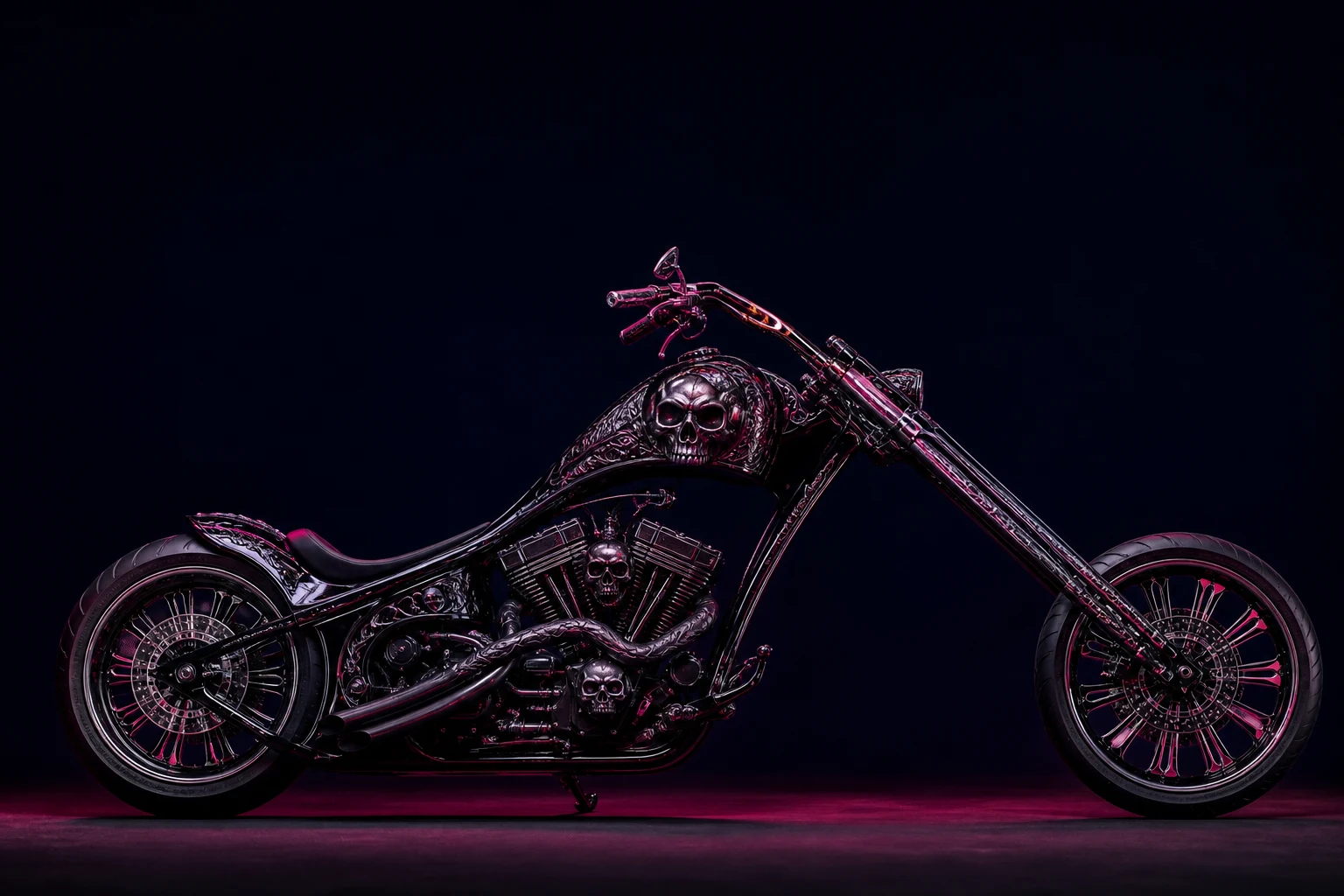
The LCC Sanctus is not a motorcycle in the way the rest of this catalog uses the word. It is a sculpture with an engine, built by a shop that treats structural components as opportunities for ornamentation and considers rideability a secondary design constraint. Skull motifs are cast into the engine covers. The wheels are cut in cathedral window patterns. The exhaust pipes wrap around the frame in a shape that serves no thermal or acoustic purpose whatsoever. It is completely ridiculous and it is genuinely magnificent.
LCC built the Sanctus for a customer who wants to arrive somewhere and have the room reorganize around them. Everything about the machine is calibrated for that moment. The exhaust note is a deep uneven hammer that rattles storefront glass. The chrome catches light in a way that is difficult to ignore. The proportions are so extreme - long forks, low seat, enormous rear tire - that people who have no interest in motorcycles stop to look at it.
In Leonida it occupies a specific cultural niche. It appears at custom shows, at the older bars along the inland routes, at rallies, and outside a handful of Vice City venues where the door staff know the owner. It is not a group-ride bike and it is not a commuter. It exists to be parked somewhere visible and occasionally ridden a short distance to be parked somewhere else visible.
None of which should suggest it is a bad motorcycle to ride, exactly. On a straight, smooth road with no reason to stop, the Sanctus is a genuinely pleasant experience - the low seat, the forward controls, the enormous torque, and the sensation of sitting inside the machine rather than on top of it are all rewarding in their own way. It is simply that the list of roads meeting those conditions in Leonida is short, and the owners have all memorized it.
Design
The Sanctus is defined by its geometry. Extended front forks rake out at an extreme angle, pushing the front wheel far ahead of the rider and stretching the wheelbase well beyond anything conventional. The seat sits low, almost between the wheels, and the rider's feet reach forward to controls mounted near the front of the frame. The rear tire is enormously wide, filling a fender that has been cut close to the tread.
Ornamentation is the whole point. Skull faces are cast into the primary drive cover and the air cleaner. The wheels are machined in a pattern of pointed arches that references church architecture directly. The exhaust headers are wrapped and swept in curves that follow the frame lines, terminating in cut ends that appear to have been finished by hand. The headlight is set in a shroud with a pointed crown, and even the fuel cap is a machined skull.
Paint work is typically multi-layer, dark, and deep - blacks with candy reds and purples underneath, airbrushed with religious and gothic imagery across the tank and fender. The frame is often powder-coated to match rather than contrast. Fasteners are polished or blacked, and there are no plastic panels anywhere on the machine. Everything is metal, and all of it is finished as if it will be inspected closely, because it will be.
Performance
The engine is a large-displacement V-twin producing enormous low-end torque and very little interest in revving. It pulls strongly from idle, requires almost no gear changes in normal riding, and delivers its power in heavy pulses that the rider feels through the frame and the forward controls. Acceleration is respectable in a straight line and the sensation of it is amplified considerably by the low seating position and the noise.
Stability at speed is genuinely good, which surprises people. The extended wheelbase and heavy front-end rake make the Sanctus track dead straight on the highway with almost no input, and it will hold a cruising speed on the causeway or the inland interstate all day. Crosswind sensitivity is low. The bike simply goes where it is pointed with considerable authority.
Turning is where the compromises arrive in force. The extreme rake means the steering is heavy and slow at all speeds, the turning circle is enormous, and low-speed maneuvering requires real physical effort and planning. Ground clearance is minimal, so any meaningful lean angle drags hardware. Braking is the weakest attribute in the class - substantial mass, a single front disc on most builds, and a chassis that does not appreciate hard stops means stopping distances are long and the bike gets unsettled if the rider grabs a handful.
Driving & Gameplay
The Sanctus is the worst practical motorcycle in the catalog and one of the most enjoyable to own, which is a distinction worth being clear about. Its straight-line stability makes highway running easy and its torque delivery is strong enough for a competent getaway on open road, but everything requiring agility is a problem. Tight turns, alley shortcuts, U-turns, and stop-start city traffic all range from awkward to impossible.
Where it does have a genuine tactical advantage is mass and stability under contact. Like the Sovereign, the Sanctus is heavy and long enough that light impacts and rough surfaces do not throw the rider off, and the relaxed forward-control riding position makes shooting from the saddle comfortable and accurate. For a straight-line running fight on the interstate, it is a surprisingly effective platform.
The braking distance is the thing that will cost you. It is the longest of any motorcycle in the state by a considerable margin, and the chassis becomes unsettled under hard braking in a way that no other bike here does. Plan stops early, never brake in a corner, and route around anything technical.
Customization
The Sanctus arrives from LCC as a custom build, so most Rideout Customs work is a matter of choosing between competing excesses. Fork length and rake angle can be adjusted further, rear tire width increased, and the seat height and position altered. Handlebars range from drag bars to apehangers that put the rider's hands well above their head, which changes the machine's silhouette dramatically.
Cosmetic work is where the money goes. Airbrushed panel art, multi-layer candy paint, engraved metalwork, alternative skull motifs on the covers, and machined wheel designs in different architectural patterns. Exhaust options change both the shape and the sound, and a straight-pipe configuration is popular among owners who have decided that their neighbors are not a consideration. Practical upgrades - a second front disc, better suspension - exist and are ignored almost universally.
Locations
The Sanctus appears where custom motorcycle culture concentrates. Custom shows and rallies, the older roadhouse bars on the inland routes, specialist builder shops in the industrial parts of Port Gellhorn, and a small number of Vice City venues with a relationship to the scene. Bike nights at inland bars are the single most reliable location.
It almost never appears in ordinary traffic. Seeing one moving on a Vice City street in daylight is unusual enough that people photograph it. Storage is typically indoors, and many examples are trailered to events rather than ridden, which their owners will deny if asked directly.
In Leonida
LCC built its reputation on hand-fabricated one-off machines for customers who wanted something that could not be bought elsewhere, working in a tradition where the frame, the tank, and the fenders are all made rather than ordered. The shop's identity became inseparable from a specific visual language - dark, ornate, heavy with religious and gothic iconography - that no competitor has successfully copied.
The Sanctus was the build that turned that language into a repeatable product. LCC established a specification, sourced the drivetrain from a large-displacement V-twin supplier, and offered the machine as a limited series while keeping enough of the fabrication in-house that no two examples are quite identical. Demand immediately exceeded the shop's capacity to build, which has kept prices high and waiting lists long. In Leonida the model found a receptive audience in the established custom scene along the inland routes, and the bikes that arrived first have appreciated steadily ever since.
Trivia
- The wheel spokes are machined in a pointed arch pattern that LCC's founder reportedly based on photographs of a specific cathedral window.
- No two Sanctus builds are identical, because enough of the fabrication remains hand-done that variation is unavoidable.
- Its turning circle is wide enough that a three-point turn on a standard two-lane road is a genuine challenge.
- A significant number of examples in Leonida are trailered to the events they appear at, which every owner denies.
- The fuel cap is a machined skull, a detail that customers request duplicated on the oil filler and the ignition key fob.