Utility & Service
Vapid Speedo
Vapid · Panel van
- Seats
- 2
- Drivetrain
- RWD
- Top speed
- ~95 mph / 153 km/h
- Price
- ~$24,000
- Mass
- 2,400 kg
- Real-world inspiration
- Ford E-Series / full-size American panel vans
- Availability
- Cheap and available immediately, and takeable from any loading dock, trade site, or fleet lot in the state.
- Overview
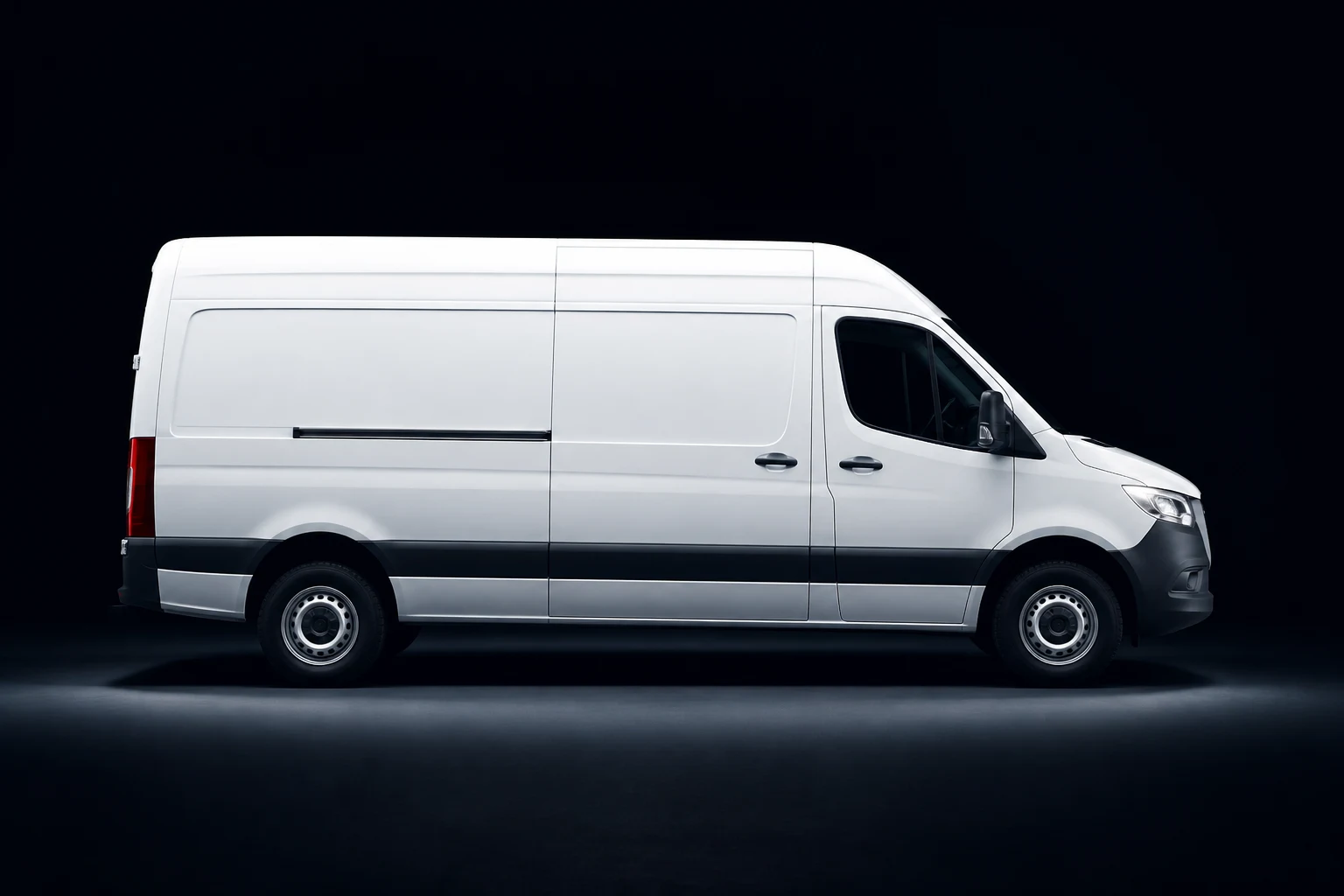
- A plain white panel van with no side windows - the most useful and least interesting vehicle in Leonida, and those two facts are the same fact.
Description
The Vapid Speedo is a rectangle on wheels and one of the most consequential vehicles in the game. It's a full-size panel van: two seats up front, a bulkhead behind them, and a windowless cargo box big enough to stand up in and long enough to lie down in. There is nothing else to it. That's the appeal.
What the Speedo provides is volume you can't see into. Every other way of moving something in Leonida involves either visible cargo or a vehicle that looks wrong doing it. A white Speedo with a ladder rack and a phone number on the door is the single most ignorable object in Vice City - it can park anywhere for hours, arrive anywhere at any time of day, and open its back doors in an alley without a single person forming an opinion about it.
Mechanically it's ancient in the best way. Body-on-frame, a big lazy V8 up front, a live rear axle under a leaf-sprung load floor, and a drivetrain that Vapid has been building essentially unchanged for a very long time. It's slow, it's crude, it handles like the box it is, and it will run for two decades on neglect and cheap parts. Fleet operators buy them by the dozen for exactly that reason.
In Leonida the Speedo is the vehicle behind everything. Plumbers, caterers, florists, delivery services, surveillance teams, and the people whose business model requires that four adults be somewhere without anyone knowing they arrived - all of them are in the same van, and none of them can tell each other apart.
Design
The design brief was volume and cost, and the result is honest about it. A short blunt nose with a simple grille and rectangular headlamps, a nearly vertical windscreen, and then a slab-sided box that runs unbroken to the rear doors. The roofline is flat, the sides are flat, the back is flat. The only curves on the vehicle are on the front fenders and they look like an afterthought.
The cab is a two-seat bench or buckets with an engine cover between them, a dashboard designed around durability rather than appeal, and a bulkhead - solid steel on most fleet examples, sometimes a window or a mesh grille - separating the cab from the load area. Visibility forward is excellent; visibility to the rear is nonexistent, which is why every Speedo has oversized mirrors and why every Speedo has scraped its rear corners.
The cargo area is a bare steel box with a plywood floor, tie rails along the walls, and a single sliding door on the curb side plus barn doors at the rear that open flat against the body. Standard finish is white, in the specific fleet-order shade that goes slightly chalky after a few Leonida summers. Everything else about the exterior - decals, ladder racks, roof vents, ghost lettering where a previous owner's signage was removed - is added later and tells you far more about the van than the manufacturer ever did.
Performance
The Speedo is not fast and does not pretend to be. Acceleration is adequate empty and laborious loaded, top speed is limited by aerodynamics that resemble a shipping container, and the transmission takes its time about everything. On the freeway it cruises comfortably enough and gets pushed around by crosswinds on the causeway in a way that keeps the driver alert.
Handling is the defining characteristic and the defining limitation. It's tall, narrow-tracked, and heavy up high, which means body roll is dramatic and lift-off in a corner is genuinely alarming. An empty Speedo driven hard will get its inside rear wheel light and will, on a bad enough surface, go over. Loaded low it settles considerably and becomes much more predictable, which is a small mercy for a vehicle that spends most of its life loaded.
What it does deliver is durability and mass. The frame absorbs impacts well, the flat sides shrug off contact, and two and a half tons of van is a serious object in any collision. Braking is the weak point - leaf-sprung rear brakes on a loaded van need a lot of road, and misjudging that in Vice City traffic is the most common way a Speedo's day ends badly.
Driving & Gameplay
The Speedo is the setup vehicle. Missions that involve staging equipment, moving people discreetly, or being somewhere for a long time without being noticed are all built around it, and the game consistently rewards players who show up in the van rather than in something faster. Its cargo box is the only place in Leonida you can put something bulky and have it genuinely disappear.
Its real mechanic is the livery. A correctly liveried Speedo changes how NPCs and security respond to your presence - a plumbing van at a residential gate, a catering van at a service entrance, a courier van at a loading dock - and using that properly turns approaches that would otherwise be violent into approaches that are simply boring. This is the closest thing the game has to a disguise system, and it's better than any of the alternatives.
The cost is everything else. It's slow, it's tippy, it brakes poorly, and once the pretense is over it's the worst vehicle in Leonida to be chased in. Plans built around a Speedo need an exit that isn't the Speedo - park the fast car two streets over, or accept that the van's job ends the moment anyone starts looking at it properly.
Customization
The Speedo has the most consequential customization catalog in the game because every option is about identity. Livery is the big one: plumbing, electrical, catering, courier, florist, cable, exterminator, and a range of plausible-looking local business wraps, plus plain white and the deliberately weathered finishes with ghost lettering that suggest a van bought at auction. Magnetic panels let you change all of it in a parking lot.
Functional work happens inside. Shelving and racking kits, a partition with a lockable door, floor and wall reinforcement, blackout treatment for the rear door windows, and an interior fit-out with bench seating that turns the cargo box into crew transport. Roof options include a ladder rack, a vent, and a roof pod. The genuinely serious modifications - a heavier suspension package to handle the load, an upgraded engine and brakes that make the van keep pace with traffic, and a set of one-way ports in the side panels - are available from the right shops and are what separate a work van from a working van.
Locations
Speedos are everywhere in urban and industrial Leonida. Delivery fleets stage them in rows behind the Vice City distribution centers, trade vans are parked outside every building under renovation, and the industrial belt has more of them than anything else on wheels. Airport service areas, hotel loading docks, and the back lots of shopping centers all keep several.
Outside the metro, they thin out but never disappear - Port Gellhorn's freight yards use them for last-mile work, Keys contractors run them across the causeway daily, and the older examples end up in Ambrosia and the agricultural country doing farm work until they stop. The most useful spawns are the fleet lots, where a dozen identical white vans mean nobody can say which one left.
In Leonida
Vapid's full-size van has been in production, largely unchanged, for longer than most of the businesses that operate them have existed. The company figured out early that fleet buyers care about purchase price, parts availability, and how many years a vehicle survives being abused by employees, and it has optimized for exactly those three things ever since while ignoring essentially every other trend in the industry.
The result in Leonida is a vehicle population so large and so uniform that it functions as genuine anonymity. Vice City's commercial districts contain thousands of white Speedos, most of them wearing decals applied by the same three sign shops, and investigators have long since given up on partial descriptions. The van's role in local criminal folklore is entirely a consequence of that arithmetic - nobody chose the Speedo because it was good, they chose it because there were too many of them to check.
Trivia
- The specific factory white that fleet buyers order goes chalky after a few Leonida summers, which is why so many Speedos look older than they are.
- Ghost lettering - the faint outline left when a previous owner's decals are peeled off - is considered a feature by buyers who want a van with a plausible past.
- An empty Speedo driven hard will lift its inside rear wheel in a corner, a characteristic every Leonida delivery driver discovers exactly once.
- Magnetic livery panels can change what business the van belongs to in under a minute, and sign shops in Vice City sell them without asking why you want six sets.
- Fleet lots park them in identical rows, which means a missing van is frequently noticed at the end of the week rather than the end of the shift.